
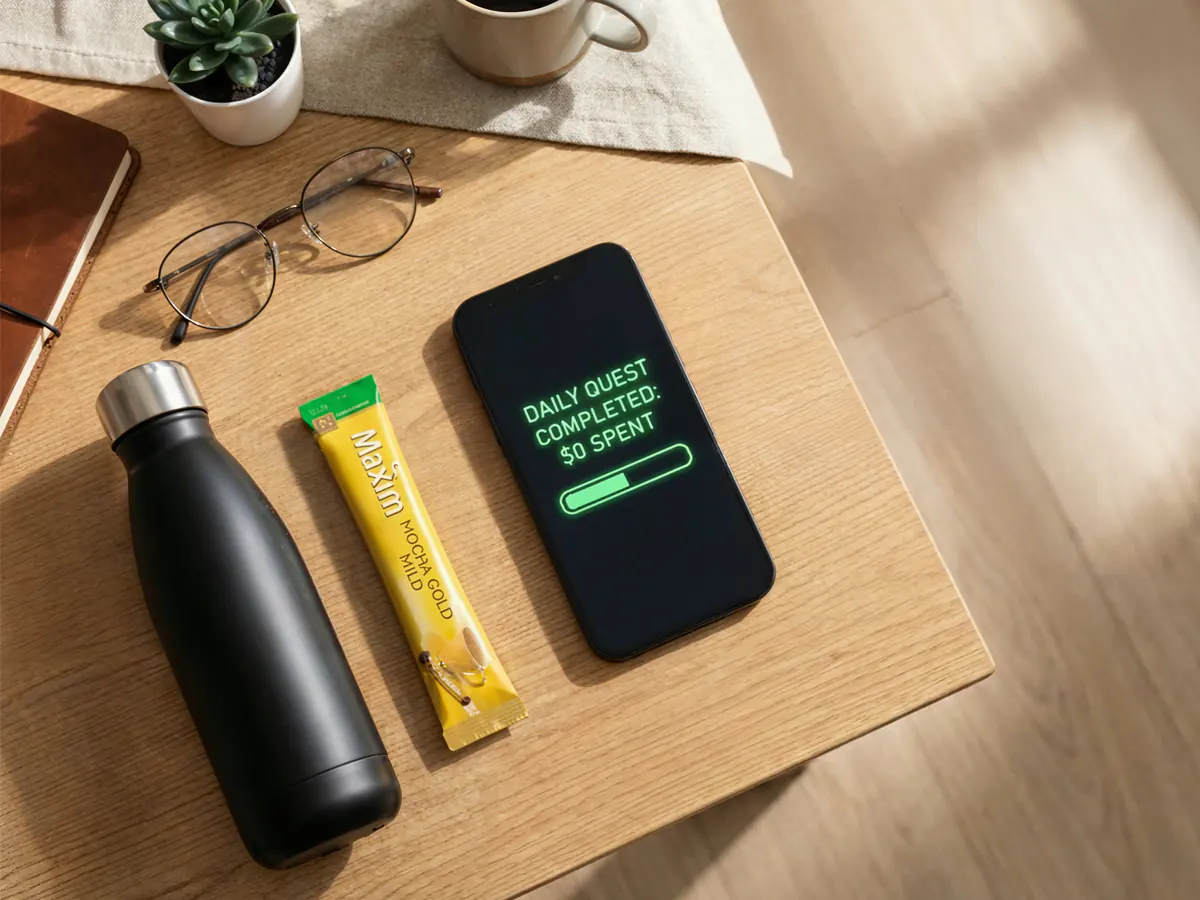
1. Introduction: A Cup of Coffee for $7, Can You Survive?
In an era of global inflation, a simple oat milk latte in New York or Toronto now costs $7. While ‘Loud Budgeting’—the act of being vocal about saving—is trending in North America, an even more extreme phenomenon is taking place in South Korea. It is the ‘Zero-Spending Challenge,’ where daily spending is kept at exactly 0 won. This is more than just saving money; it is a unique culture that has turned economic pressure into a survival game.
2. Who is Risking Everything for ‘0 Won’ and Why?
The main participants are the MZ generation and urban office workers. Faced with ‘Lunchflation’ where lunch prices exceed 10,000 won ($7.50), they had to choose whether to save miserably or enjoy the situation. They chose the latter. The core of the Zero-Spending Challenge lies in the ‘Gamification of Pain.’ By reframing unpredictable economic pain into a ‘quest,’ they are reclaiming control over their lives in a joyful way.
3. K-Survival Skills: 5 Stages to Survive a Day on 0 Won
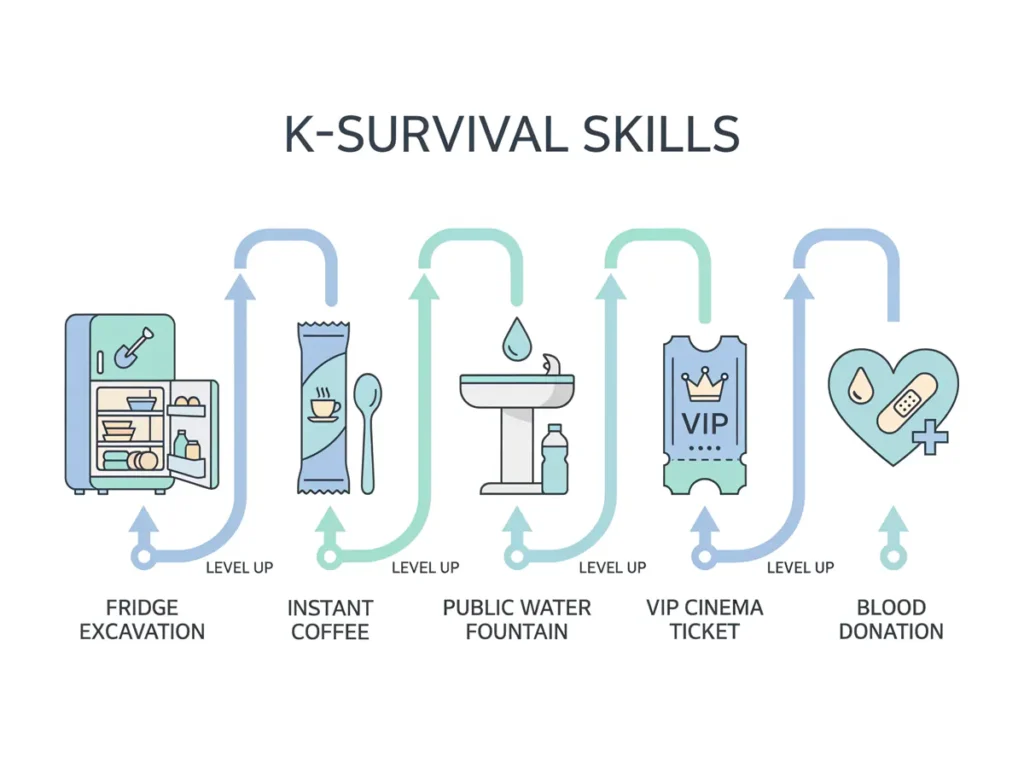
Korean challengers strategically practice zero spending by identifying gaps in the system. The stages from common to hardcore methods are as follows:
- Stage 1: Naeng-pa (Fridge Excavation) – The foundation of food cost saving
All zero-spending begins in the kitchen. Instead of buying new ingredients, they cook with forgotten ‘relic-like’ items found deep in the fridge. This becomes a game of sharing creative recipes.
- Stage 2: 100-won Latte, Mix Coffee – Portable luxury
Instead of a $7 Starbucks, they carry ‘3-in-1 mix coffee’ sticks—a symbol of Korean office culture—in their pockets. Using the office pantry or a single stick from home to satisfy caffeine needs for 0 won is the most efficient energy boost.
- Stage 3: Utilizing Public Water Purifiers – Bottled water is a luxury
South Korea has high-performance purifiers in public places like banks and subway stations. A personal tumbler is a must for challengers. Buying $2 bottled water on the street is considered a ‘strategic defeat’ in this game.
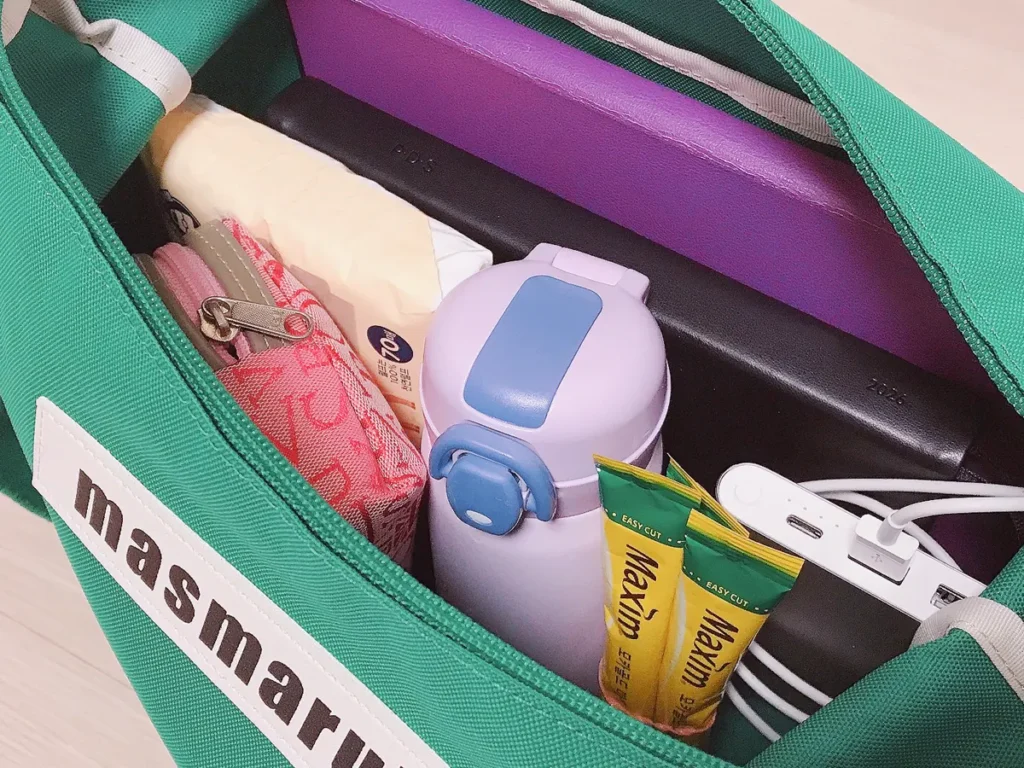
- Stage 4: Weaponizing Telecom Membership – Revenge of fixed costs
They extract maximum value from fixed costs like their mobile phone bills. Using free movie tickets or bakery coupons provided by mobile carriers, they enjoy snacks and culture for 0 won.
- Stage 5: Blood Donation Rewards – The ultimate win-win
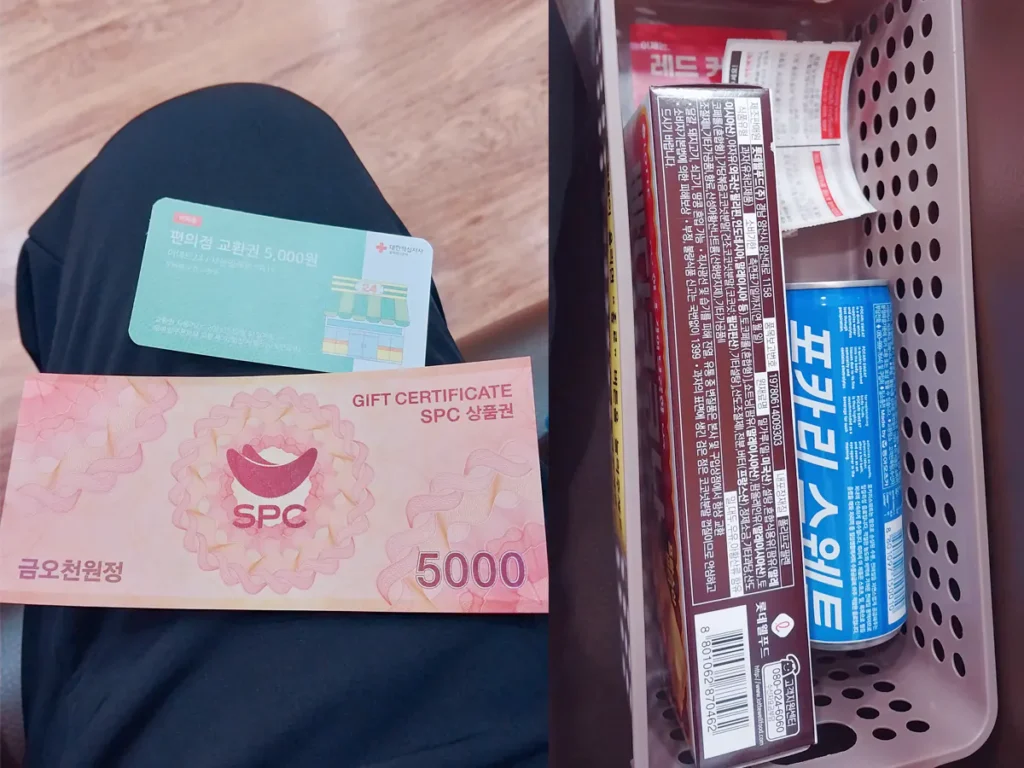
This is the most unique hardcore tactic. Participants use movie vouchers or meal coupons received from donating blood for dates or meals. It is important to note that these rewards are symbolic tokens for a voluntary, altruistic act meant to help others, rather than a commercial transaction. Solving the ‘cultural life cost’—the biggest hurdle of the challenge—through a noble act of sharing life shows a unique Korean pragmatism.
4. Secret Weapon: The Humor of ‘Beggars’ Chat’
Saving is miserable alone, but it becomes a comedy when done together. The final secret weapon for challengers is the anonymous group chat known as ‘Beggars’ Chat.’ The term ‘Beggars’ is used here in a purely satirical and self-deprecating sense, serving as a humorous way for members to bond over their shared financial goals. Members monitor and encourage each other’s spending in a highly satirical way. When someone says, “I’m hungry, I want to buy chocolate,” the room leader replies, “The fact that you have the energy to think about chocolate means you aren’t hungry enough.” This ‘tough-love humor’ and mutual surveillance turn a lonely struggle into a joyful solidarity.
5. The Great Paradox: Convenience Store Meals and Luxury Bags
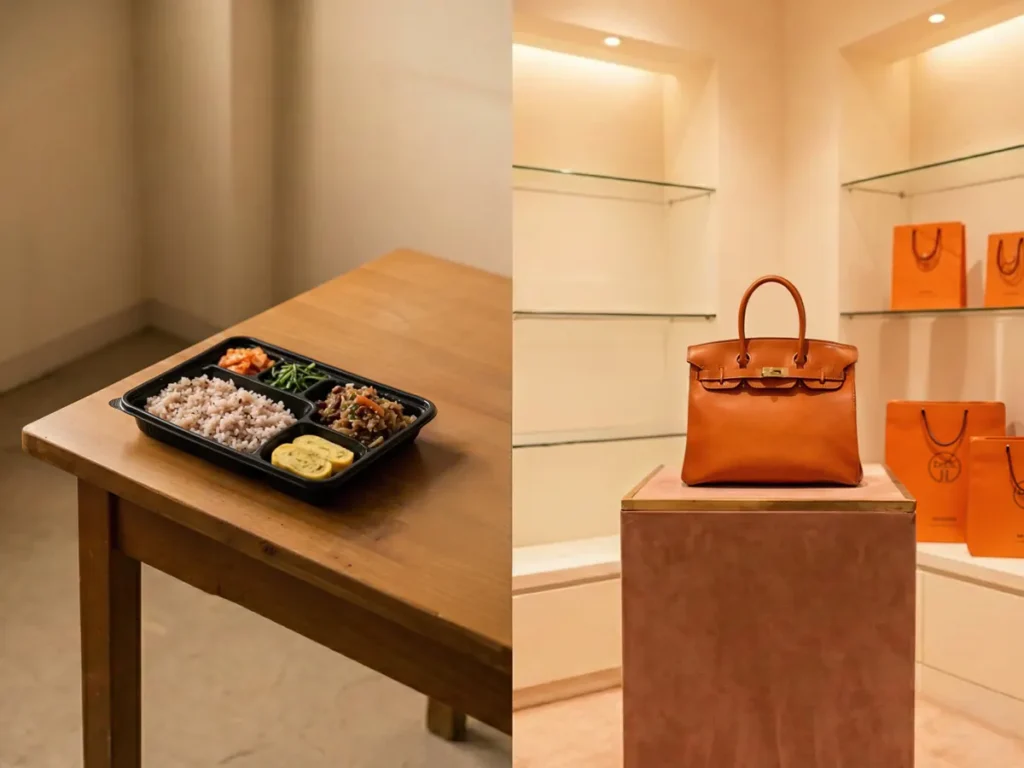
An interesting social aspect is revealed here. South Korea has the world’s highest per capita luxury spending. ‘Ambivalent Consumption’ coexists where people survive on convenience store meals and zero spending on weekdays but line up for luxury bags on weekends. While they may have given up on buying a home in the future, they control their daily lives extremely for a ‘certain reward’ they can hold today. The Zero-Spending Challenge may be the smart fuel for this flashy consumption.
6. Bonus: Is ‘K-Zero Spending’ Possible in Your City?
🧊 Pantry Challenge
Before heading to the market, try to survive a week using only canned goods and pasta tucked away in your pantry. This is the Western equivalent of ‘Naeng-pa.’
📱 Use Habit Tracking Apps
Use apps like ‘Habitica’ to manage your zero-spending success like a character leveling up in a video game.
🤝 Find Accountability Communities
Gain motivation by sharing records with people worldwide via Reddit’s r/NoSpend or Instagram’s #NoSpendChallenge.
🏁 Conclusion: What is the Value of Your Day?
The Korean Zero-Spending Challenge is a self-portrait of modern people fighting the wave of inflation with humor and strategy. Today, why not try a ‘0 won quest’ instead of your usual coffee? In the process, you might realize what it is you truly value.