
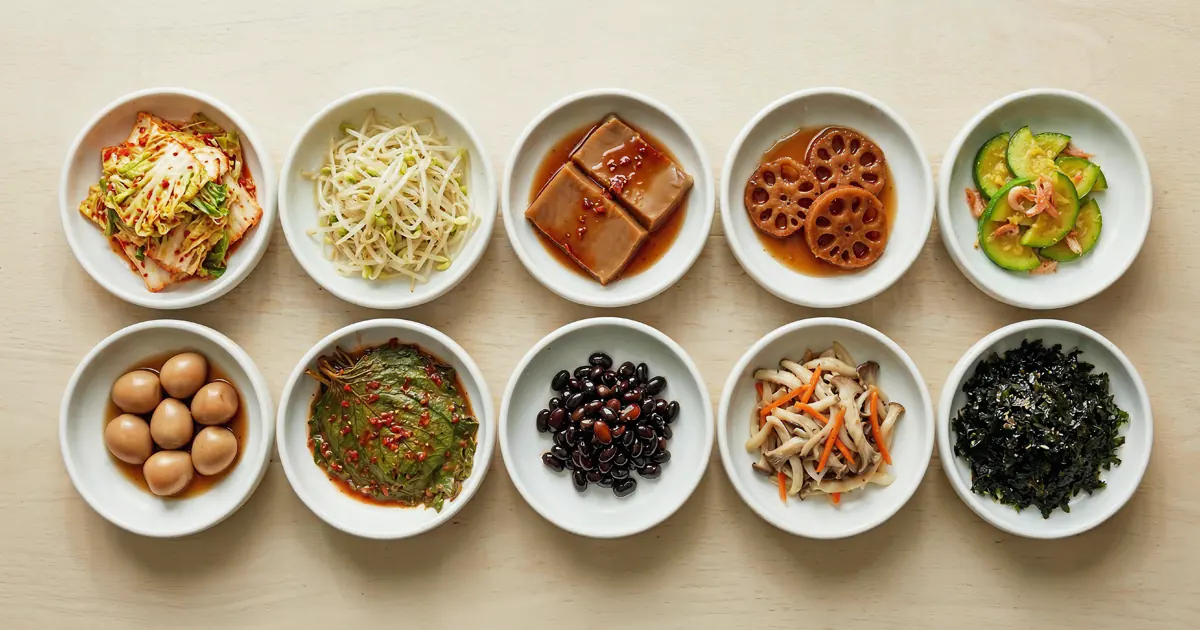
Do the 10 basic side dishes introduced in Part 1 feel a bit more familiar now when you see them at a Korean restaurant?
This guide is for those who have hesitated with their chopsticks, wondering, “What is this bouncy jelly?” or “How am I supposed to eat this leaf-like thing?” While Part 1 focused on the most common and popular side dishes, Part 2 introduces some slightly more unique ingredients and distinctive textures.
Just like in Part 1, we provide detailed descriptions and images for each side dish to help you identify them easily.
1. Geotjeori (Fresh Kimchi)
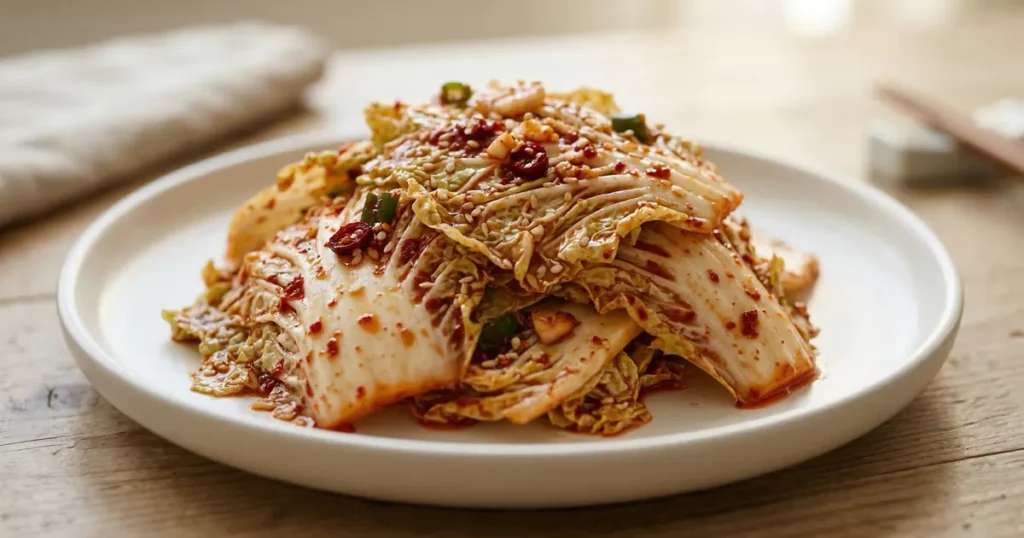
- Main Ingredients: Napa cabbage, chili powder (gochugaru), garlic, fish sauce, sugar.
- Description: The word Geotjeori means the cabbage hasn’t been fully pickled to the core; instead, it’s lightly tossed in seasoning. While it uses similar ingredients to regular Kimchi, it doesn’t go through a fermentation process, making the taste much fresher and lighter. The crunchy texture of the cabbage is preserved and paired with a refreshing, spicy seasoning—it’s often enjoyed like a spicy Korean salad.
2. Sukjunamul (Mung Bean Sprout Salad)
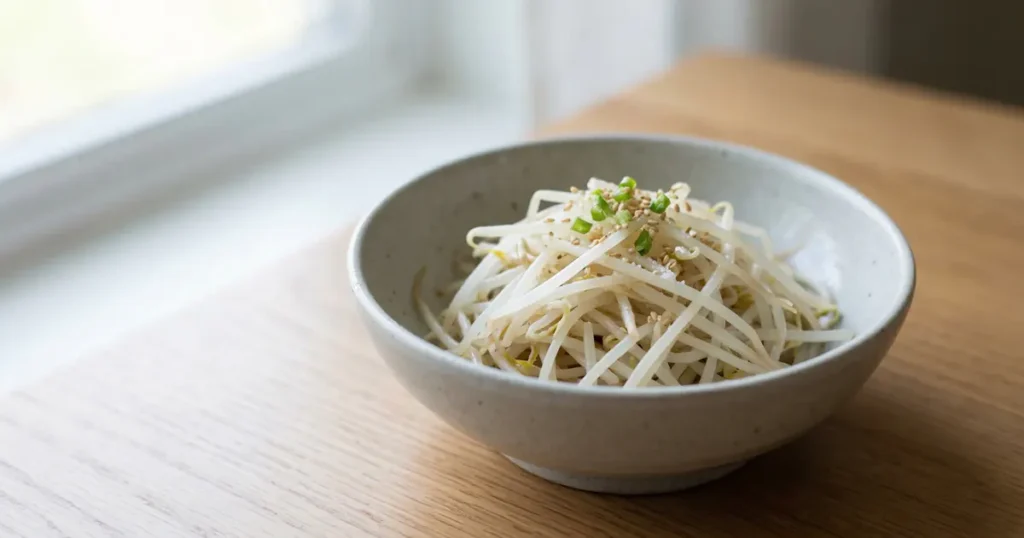
- Main Ingredients: Mung bean sprouts, minced garlic, sesame oil, salt.
- Description: It looks similar to soybean sprouts (kongnamul), but it has smaller heads and a much softer texture. Thanks to its mild and clean flavor, it serves as a great palate cleanser when eaten with spicy main dishes. Since it’s not pungent, it’s a dish that even those new to Korean food can enjoy without hesitation.
3. Dotorymuk (Acorn Jelly)
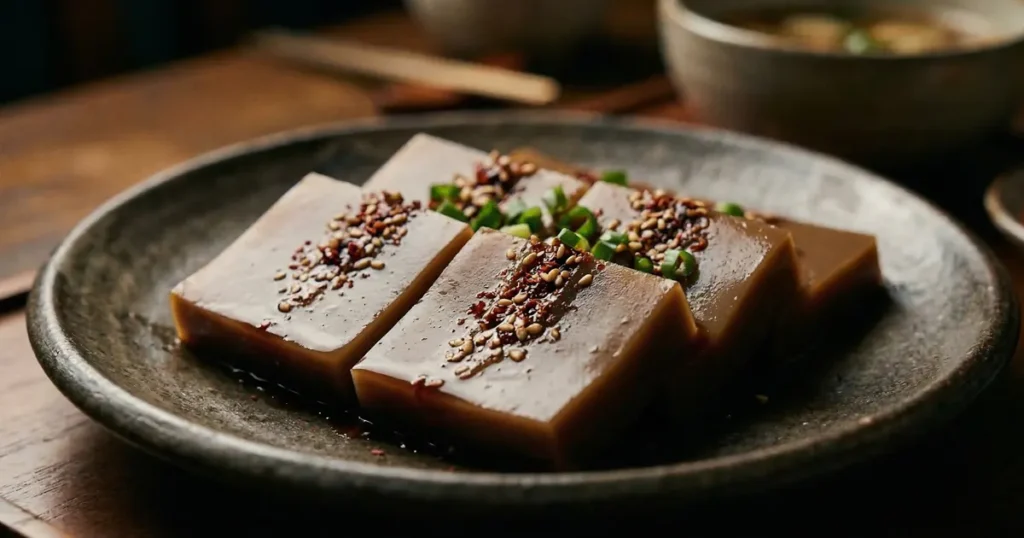
- Main Ingredients: Acorn starch jelly, soy seasoning sauce, crown daisy.
- Description: This brown, jelly-like dish made from acorn powder is one of the side dishes that global travelers find most intriguing. While it looks like a dessert jelly, it isn’t quite as bouncy or elastic. It has a unique texture that breaks down softly in the mouth and features a subtle, characteristic bitterness.
4. Aehobak-bokkeum (Stir-fried Zucchini)
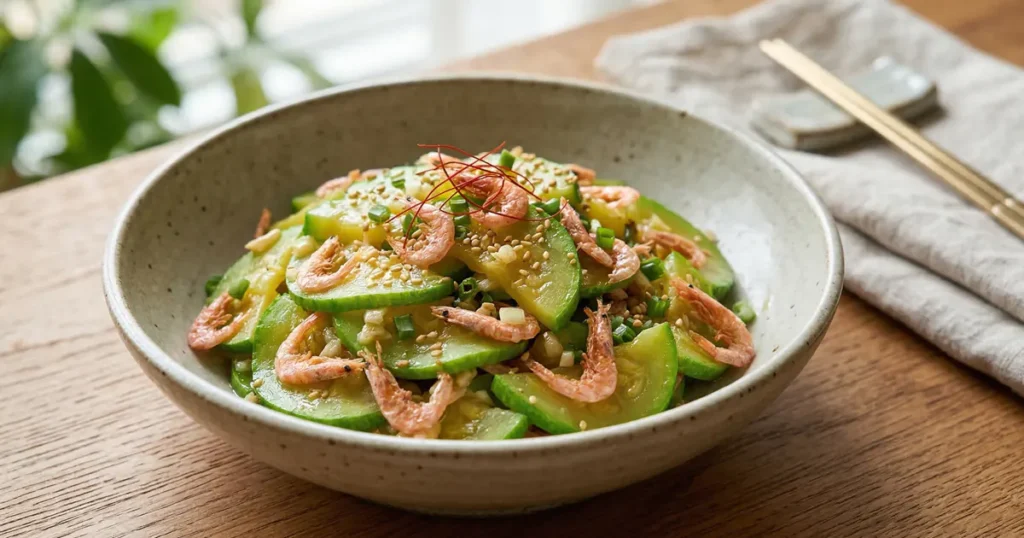
- Main Ingredients: Korean zucchini (aehobak), salted shrimp (saeujeot), minced garlic, cooking oil.
- Description: Korean zucchini is much softer and sweeter than Western zucchini. It is typically stir-fried with salted shrimp to add a deep umami flavor. The savory seasoning and the tender texture of the zucchini pair beautifully together. It’s a staple vegetable side dish in Korean restaurants.
5. Neutari-bokkeum (Stir-fried Oyster Mushrooms)
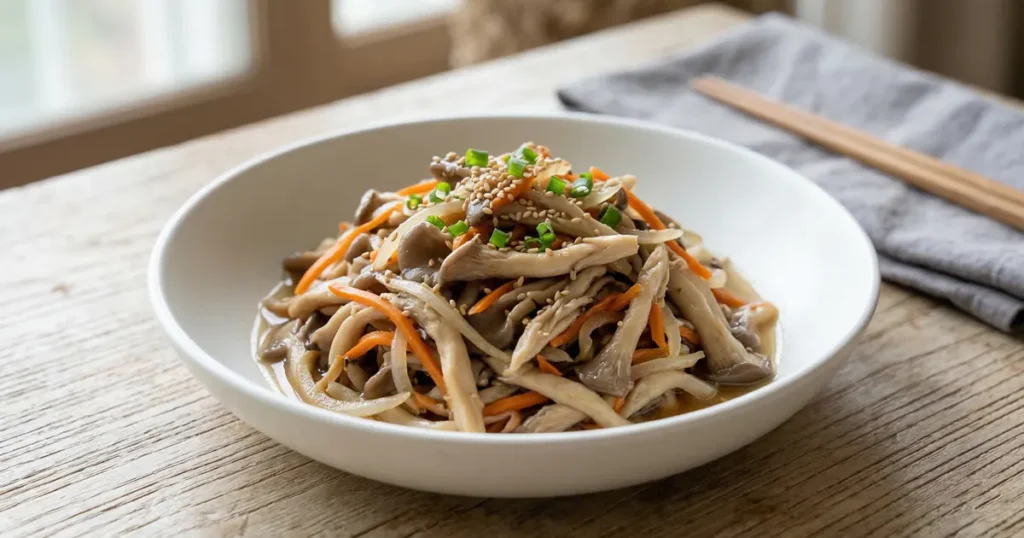
- Main Ingredients: Oyster mushrooms, carrots, onions, sesame oil.
- Description: This dish consists of oyster mushrooms torn into strips and stir-fried in savory oil. It is characterized by its chewy, meat-like texture and is a favorite for those who enjoy the natural earthy aroma of mushrooms. The fragrance of the mushrooms combined with the nuttiness of sesame oil creates a simple yet deep flavor.
6. Gimjaban (Seasoned Seaweed Flakes)
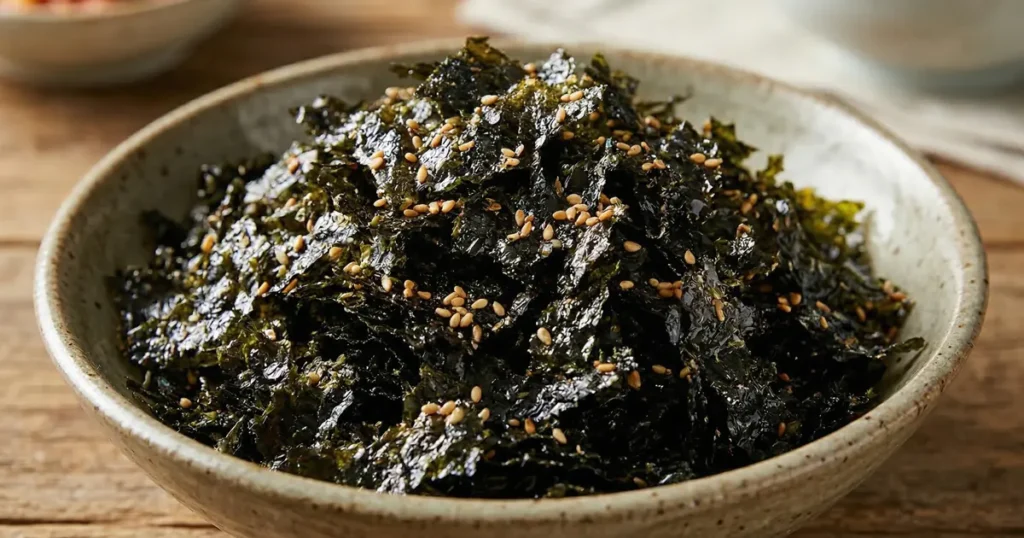
- Main Ingredients: Dried seaweed (laver), sugar, salt, sesame oil.
- Description: Dried seaweed is crumbled into small bits, stir-fried in oil, and seasoned. It has a signature crispy texture and is usually sprinkled over rice or used as an ingredient for rice balls (jumeokbap). Its sweet and salty crunch makes it especially popular with children.
7. Yeongeun-jorim (Braised Lotus Root)
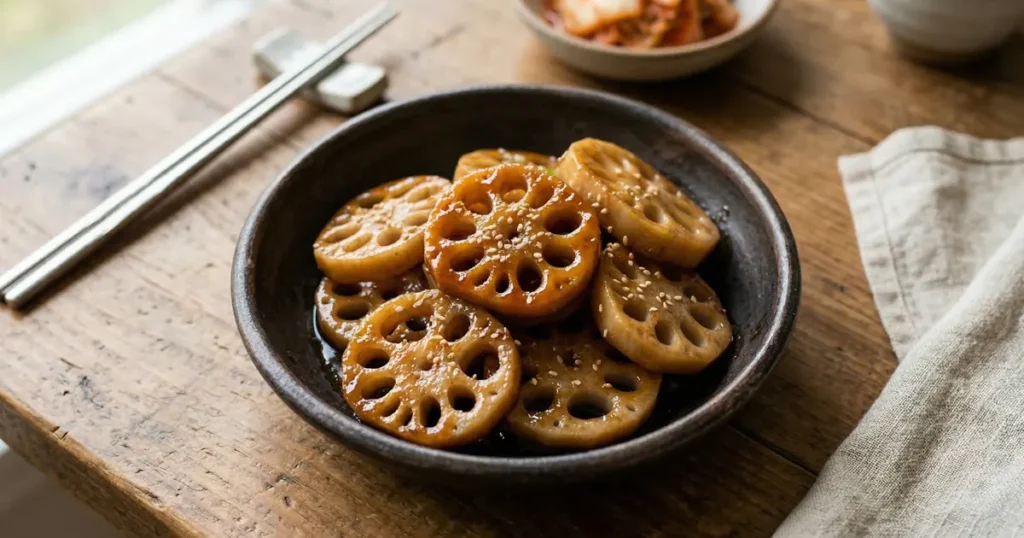
- Main Ingredients: Lotus root, soy sauce, corn syrup (or sugar), cooking oil.
- Description: This dish is made by simmering lotus root—the root of the lotus flower—in a sweet and salty soy-based glaze. It’s easily recognized by its unique “holey” cross-section and crunchy texture. Depending on the cooking time, the texture can vary: a shorter simmer keeps it crunchy, while a longer one makes it pleasantly chewy.
8. Mechurial Jangjorim (Braised Quail Eggs in Soy Sauce)
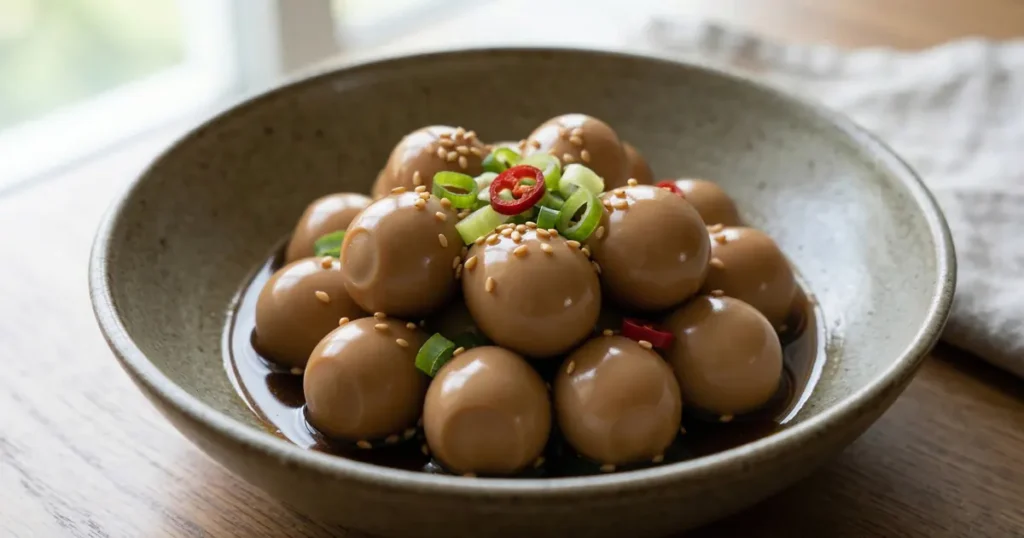
- Main Ingredients: Quail eggs, soy sauce, sugar, garlic.
- Description: These are bite-sized quail eggs simmered in a savory soy sauce mixture. They are very easy to eat in one go, and the highlight is the rich, savory flavor of the yolk infused with the salty-sweet sauce. It’s a very popular “comfort food” side dish in Korean households.
9. Kkaetnip-muchim (Seasoned Perilla Leaves)
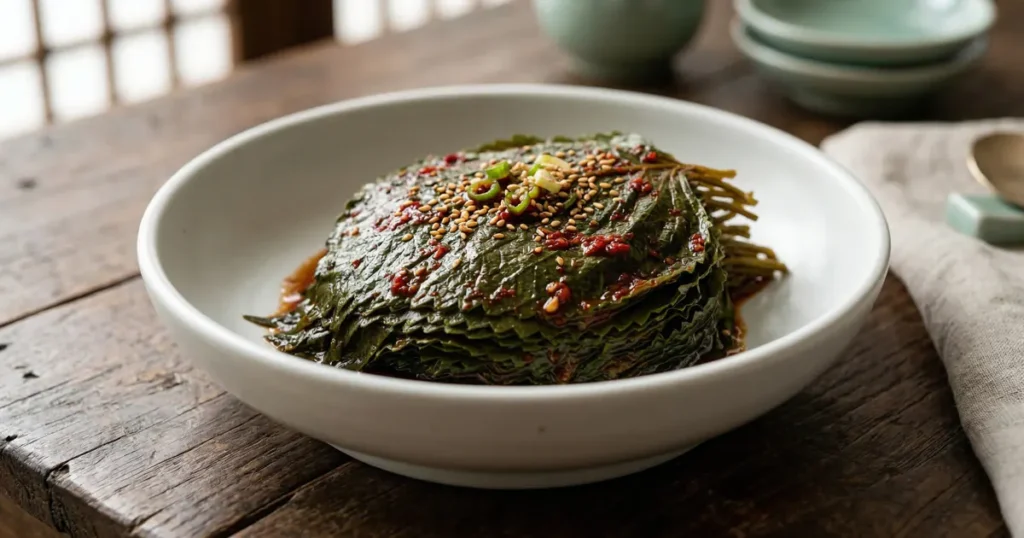
- Main Ingredients: Perilla leaves, soy sauce, chili powder, minced garlic.
- Description: Perilla leaves are a fragrant herb frequently used in Korean cuisine. This side dish is made by marinating the leaves in a spicy soy seasoning. They have a very strong, distinct aroma. Placing a single perilla leaf over a spoonful of rice is one of the best ways to experience a truly bold Korean flavor profile.
10. Kongjaban (Braised Soybeans)
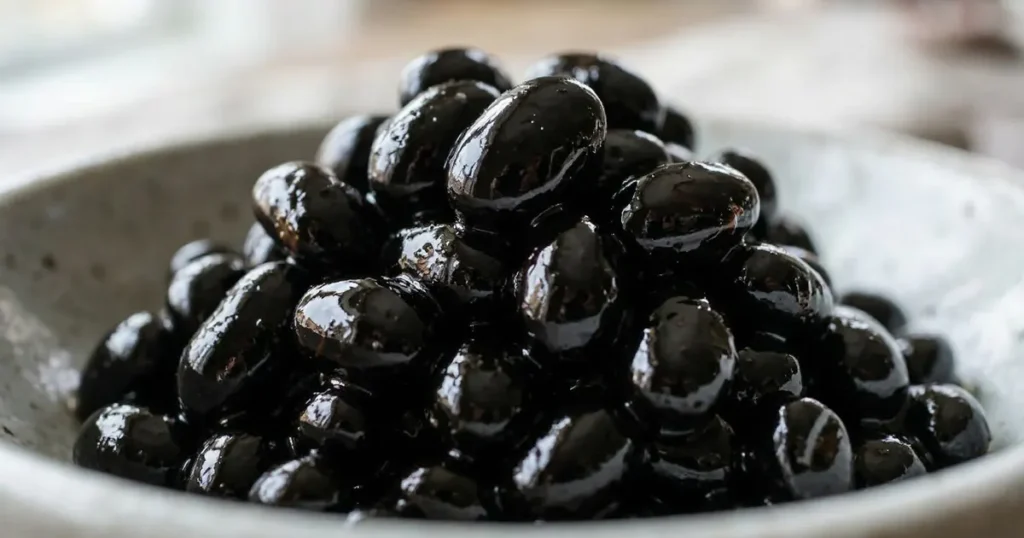
- Main Ingredients: Black soybeans, soy sauce, sugar, corn syrup.
- Description: These are black soybeans simmered in soy sauce until they are sweet and salty. The more you chew, the nuttier they become, and they have a delightful chewy texture. It’s a highly nutritious side dish, and there’s a bit of fun in trying to pick up the beans one by one with your chopsticks!
💡 Tips for Enjoying Banchan Even More
- For Vegetarians: While most side dishes are vegetable-based, Geotjeori or Aehobak-bokkeum often contain fish sauce or salted shrimp. If you are a strict vegan, it’s a good idea to check before ordering!
- The Harmony of Textures: Try alternating between the softness of Dotorymuk and the crunch of Yeongeun-jorim. The true charm of Korean food lies in this “harmony of textures.”
- Banchan is a Sharing Culture: In Korea, side dishes are meant to be shared by everyone at the table. Sharing these small plates is a significant and heartwarming part of Korean dining culture.
Now you’ve mastered 20 different side dishes! What other Korean foods are you curious about? We’re rooting for your delicious culinary journey!