
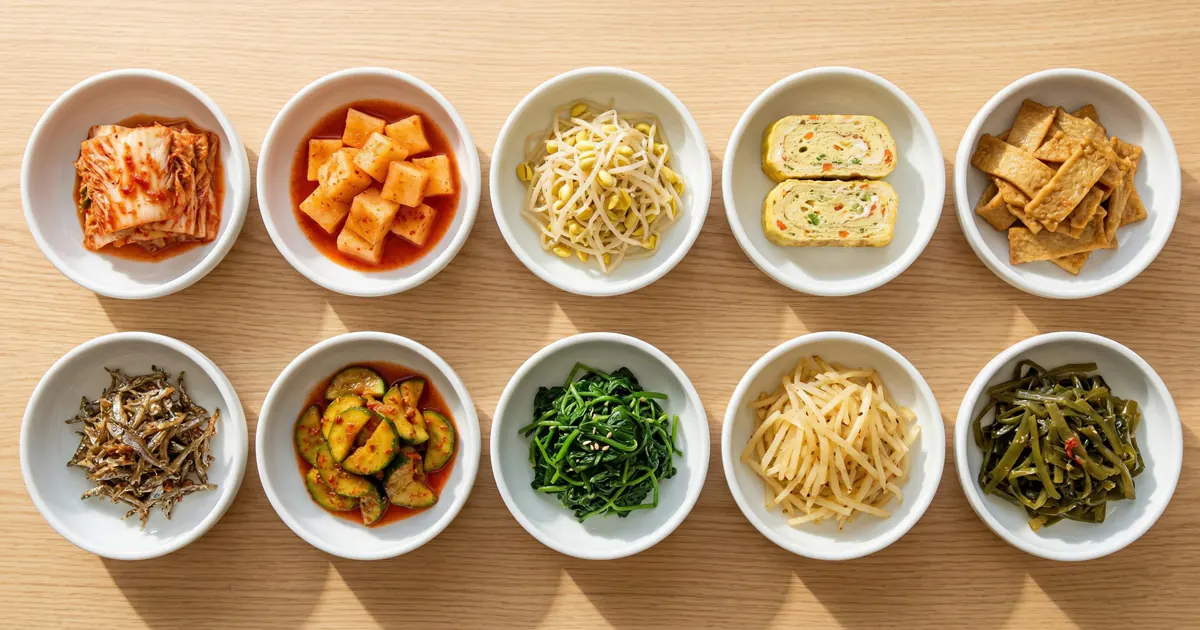
Have you ever watched a K-drama and seen characters surrounded by dozens of tiny plates, wondering what all those dishes taste like? Or perhaps you’ve sat down at a Korean restaurant and been surprised by a parade of small dishes arriving before you even ordered.
These small dishes are called banchan, the traditional Korean side dishes served with almost every meal. They are an essential part of Korean food culture.
If you’ve ever wondered what these dishes are, this guide will introduce 10 essential Korean side dishes you’re likely to encounter. Each dish is accompanied by an image, making it easy to recognize and identify the banchan you may have seen before—or even tasted at a Korean table.
1. Baechu Kimchi (Napa Cabbage Kimchi)
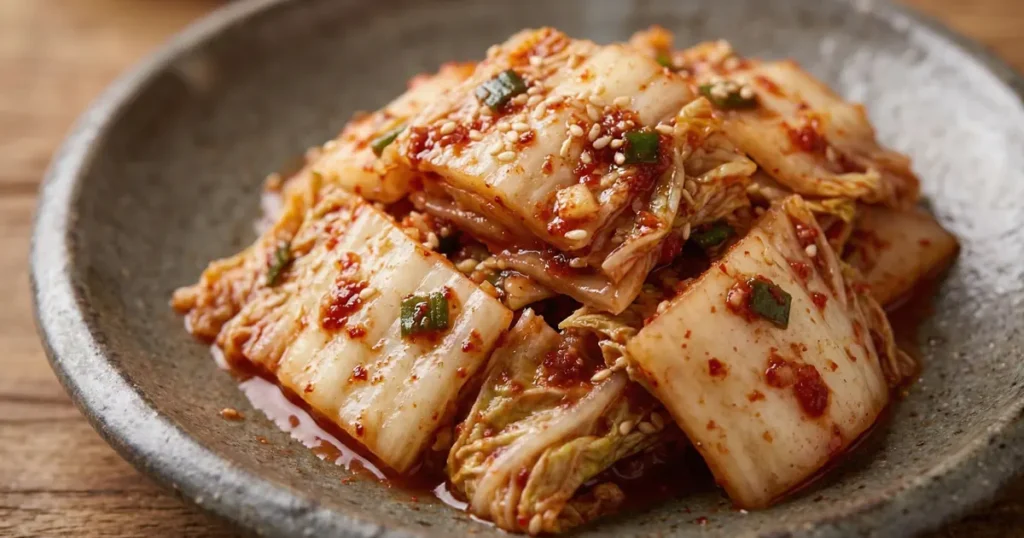
- Main Ingredients: Salted napa cabbage, Korean chili flakes (gochugaru), garlic, ginger, fermented fish sauce.
- Description: This is one of the most iconic staples of Korean cuisine. Kimchi is made by salting and fermenting vegetables—a process that naturally produces probiotics and gives it its signature tangy flavor. With its deep, refreshing acidity and spicy kick, it is a versatile side dish that pairs well with almost any meal.
2. Kkakdugi (Diced Radish Kimchi)
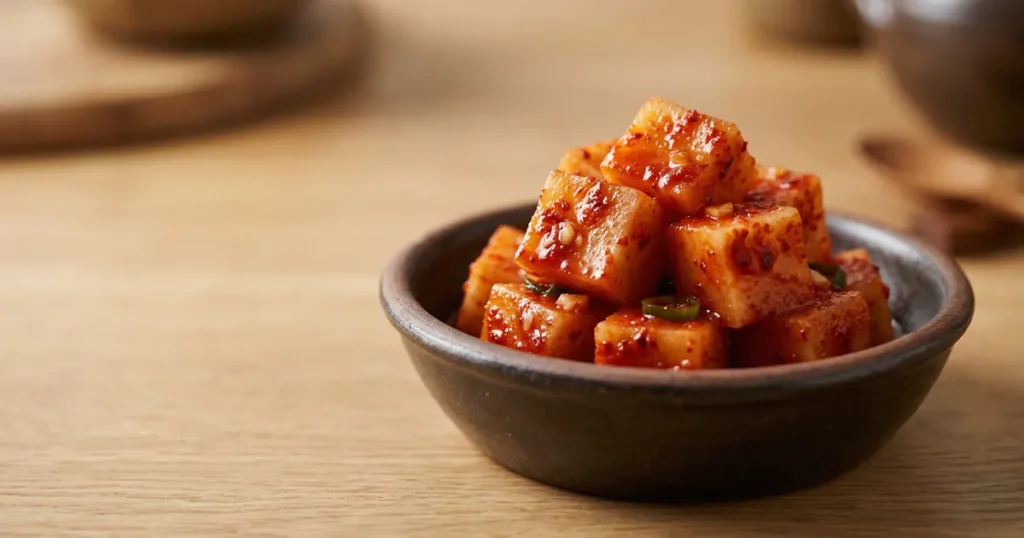
- Main Ingredients: Korean radish (Mu), Korean chili flakes, fermented anchovy sauce, green onions.
- Description: Made with diced Korean radish, this kimchi offers a firmer and more satisfying crunch than cabbage kimchi. The natural sweetness of the radish blends beautifully with the spicy seasoning. It pairs especially well with hot soups like Seolleongtang (ox bone soup), refreshing the palate with every bite.
3. Kongnamul Muchim (Seasoned Soybean Sprouts)
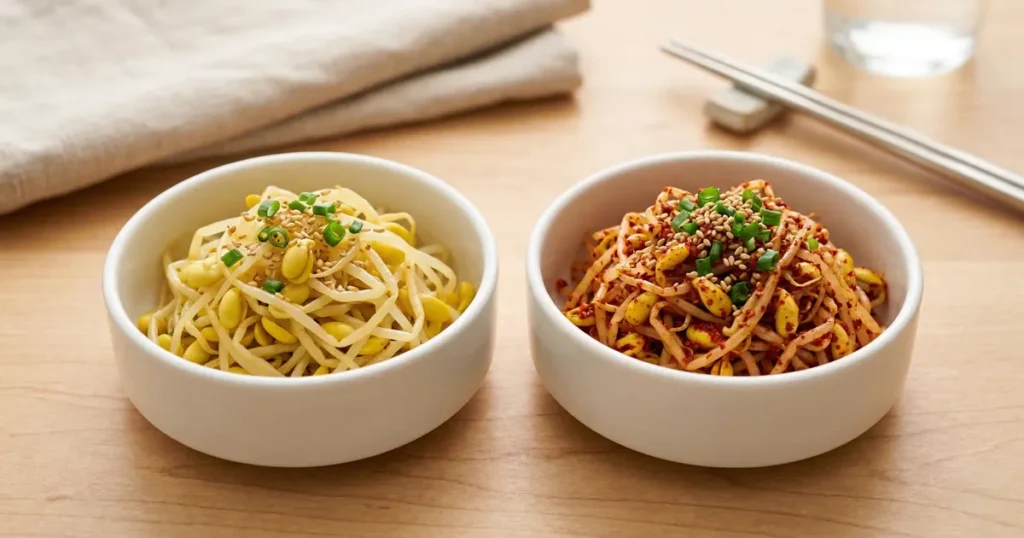
- Main Ingredients: Soybean sprouts, sesame oil, garlic, salt (or Korean chili flakes).
- Description: This is one of the most common vegetable side dishes in Korea. It features a pleasant contrast between the crunchy stalks and the nutty heads of the sprouts. Seasoned with sesame oil and garlic, its mild flavor makes it a great match for spicy main dishes.
- What is Kongnamul? Learn more in our ingredient guide: 👉 Korean Ingredients #05: Kongnamul (Soybean Sprouts)
4. Gyeran-mari & Gyeran-jjim (Rolled Omelette & Steamed Egg)
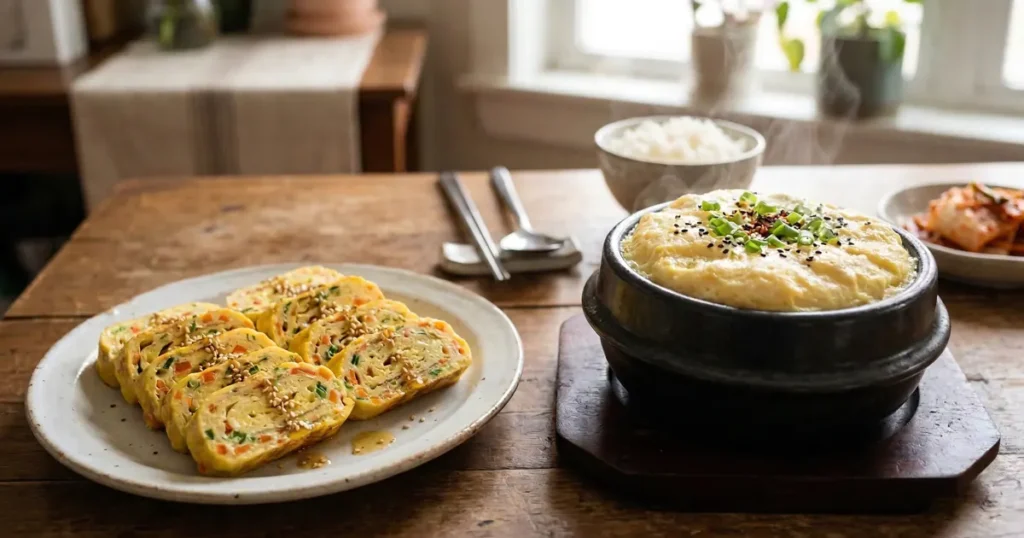
- Main Ingredients: Eggs, minced vegetables (carrots, green onions), salt.
- Description: These are classic Korean comfort foods. Whether it’s the savory, layered rolled omelette or the soft, fluffy steamed egg, their mild flavor makes them comforting and easy to enjoy. They are perfect for soothing your tongue after a spicy bite and add a warm, home-cooked touch to the meal.
5. Eomuk Bokkeum (Stir-fried Fish Cake)
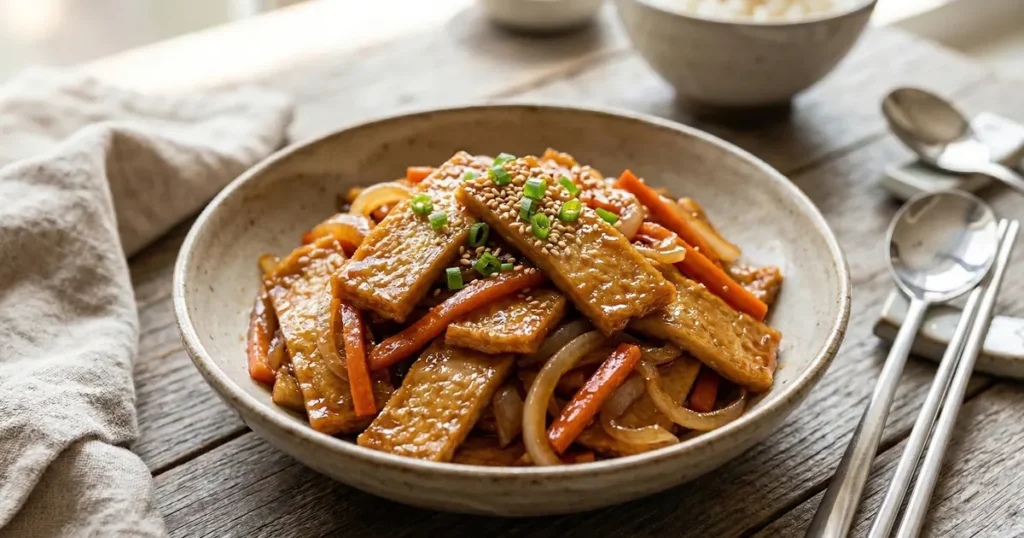
- Main Ingredients: Fish cakes, soy sauce, corn syrup, onions, carrots.
- Description: Stir-fried in a salty and sweet soy-based sauce, this is a side dish that appeals to almost everyone. The chewy texture of the fish cake combined with the sweetness of the onions creates the classic Korean balance of sweet and savory. It’s a nostalgic staple that’s simple yet addictive.
6. Myeolchi Bokkeum (Stir-fried Anchovies)
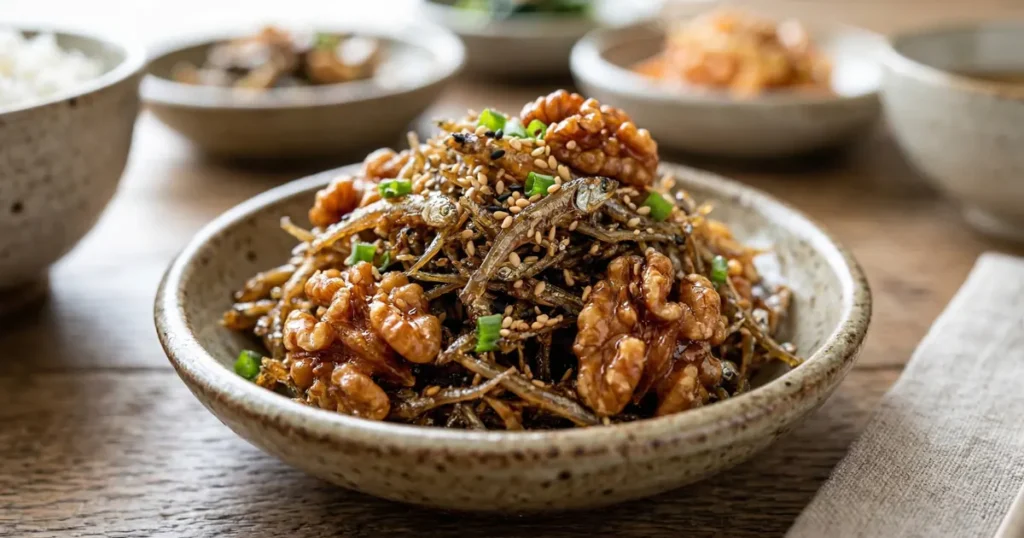
- Main Ingredients: Small dried anchovies, soy sauce, sugar (or oligo-syrup), nuts.
- Description: These tiny dried anchovies are stir-fried until crispy. In Korea, they are known as a “rice thief” (bap-doduk)—a term used for dishes so flavorful they make you eat more rice. Coated in a sweet and savory glaze, they are a great source of calcium and have a snack-like, crunchy texture.
7. Oi Muchim (Spicy Cucumber Salad)
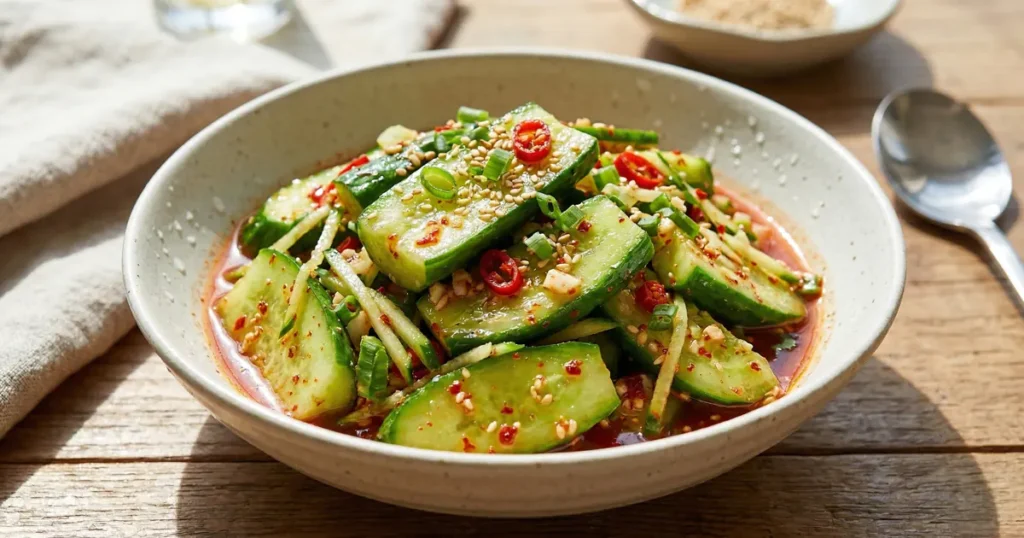
- Main Ingredients: Cucumber, Korean chili flakes, vinegar, sugar.
- Description: This spicy and sour dish highlights the refreshing crunch of cucumbers. The tanginess of the vinegar makes it especially refreshing, while the Korean chili flakes leave a clean finish. It’s a revitalizing dish that cuts through the richness of greasy foods like Korean BBQ.
8. Sigeumchi Namul (Seasoned Spinach)
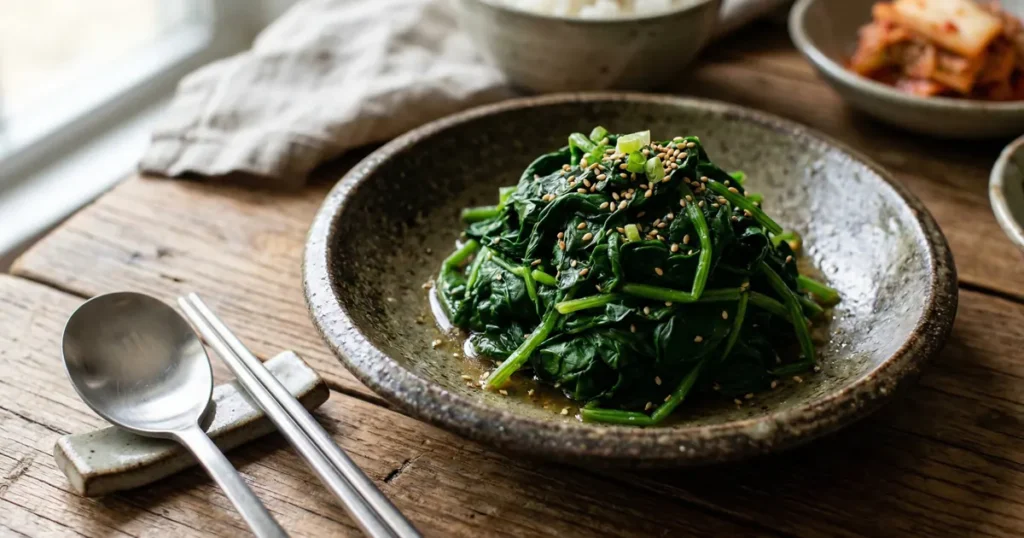
- Main Ingredients: Spinach, soup soy sauce, minced garlic, sesame oil.
- Description: Briefly blanched to preserve its natural sweetness, this dish showcases “son-mat”—the subtle, home-style touch of the cook that defines Korean cooking. The combination of savory sesame oil and tender spinach makes it a simple, healthy staple on many Korean tables.
9. Gamja Bokkeum (Stir-fried Shredded Potatoes)
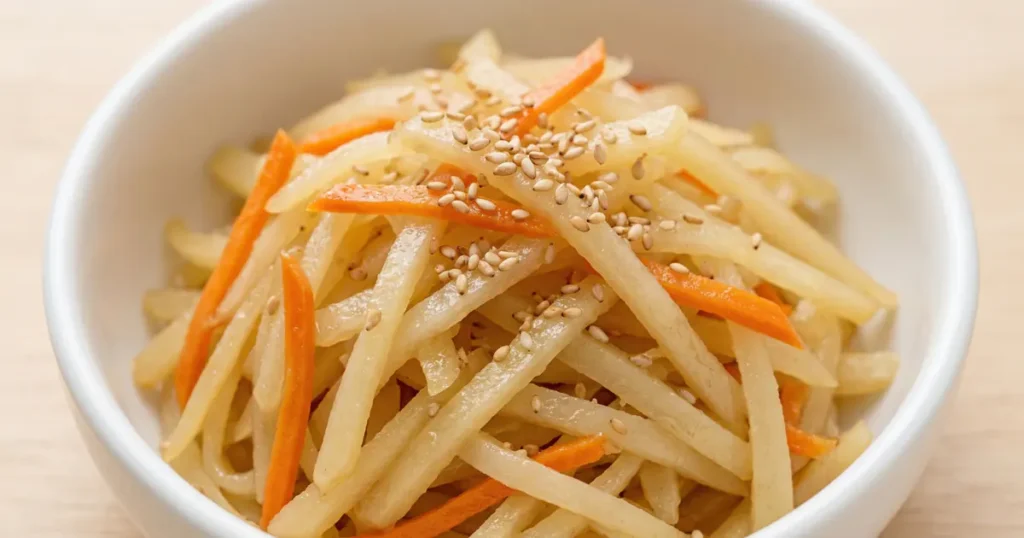
- Main Ingredients: Potatoes, onions, salt, cooking oil.
- Description: These thinly shredded potatoes are stir-fried until they reach a soft and slightly crispy texture. Seasoned simply with salt, the natural savoriness of the potato is the star. It’s a mild, approachable side dish that everyone enjoys.
10. Miyeokjulgi Bokkeum (Stir-fried Seaweed Stems)
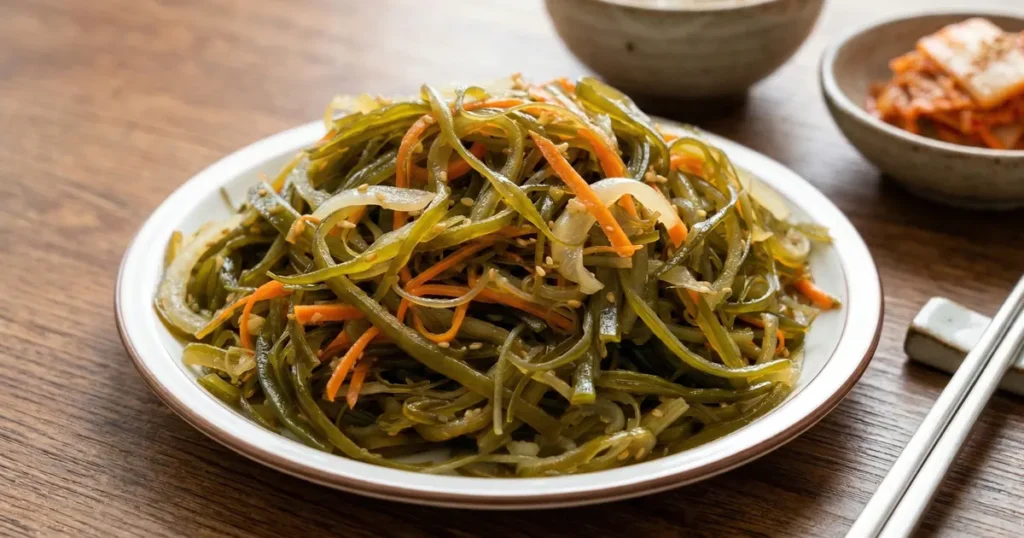
- Main Ingredients: Seaweed stems, garlic, cooking oil, perilla oil.
- Description: These seaweed stems bring a subtle taste of the sea and a pleasantly chewy, crunchy texture. Stir-fried with garlic and savory oil, they offer a clean, umami-rich finish. While the look might be unfamiliar at first, their distinctive texture quickly becomes addictive.
💡 Tips for Dining at Korean Restaurants
- Free Refills: Many Korean restaurants offer free refills of banchan. If there’s a dish you particularly liked, feel free to ask if it can be refilled. In some restaurants, you may also see a corner labeled “셀프 (Self)” where you can take additional banchan yourself.
- Best with Rice: Most banchan are designed to be eaten with white rice to balance their seasoning.
- Spice Levels: Red-colored dishes can be spicier than they look. Try a small bite first!
Now, when you see a Korean table filled with banchan, you’ll know exactly what you’re looking at. Each dish reflects the flavors of the seasons and the care of the cook. We hope this guide makes your Korean culinary journey even more enjoyable!