
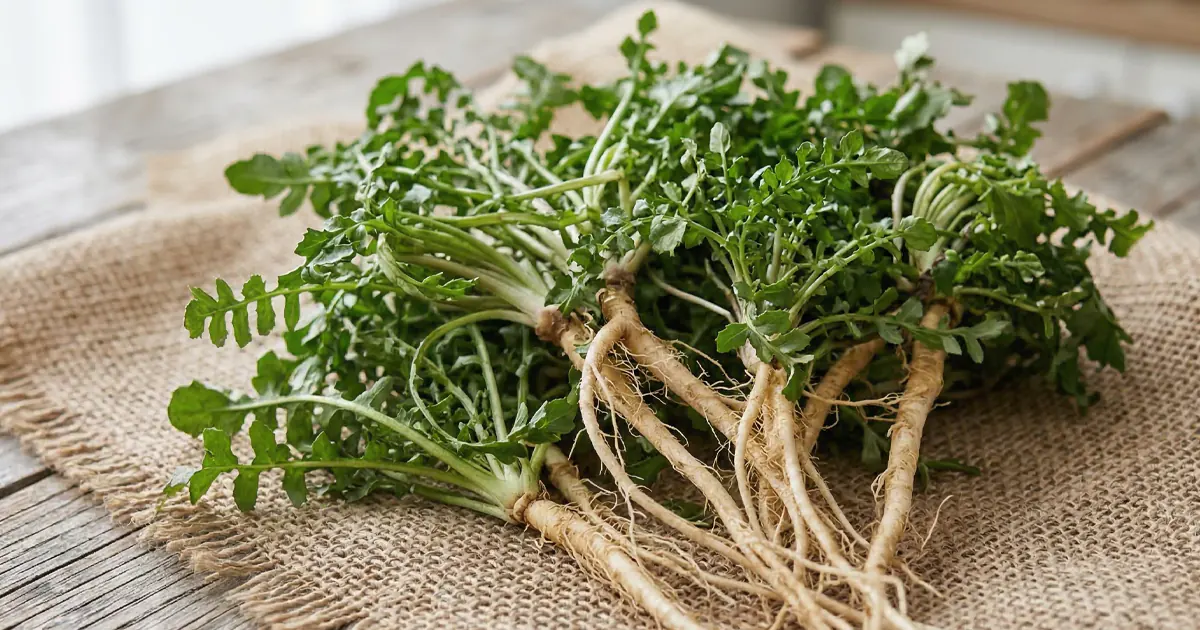
When winter coats begin to feel heavy and green bundles covered in soil start appearing in the corner of the grocery store’s produce section, Koreans finally feel that spring has arrived. Naengi (Shepherd’s Purse) isn’t a common year-round staple like kimchi or bean sprouts. However, when the warm sunlight of March hits, that pungent, earthy aroma somehow seems to brush against the tip of one’s nose.
In the West, it is often known merely as a common roadside weed or a wildflower called “Shepherd’s Purse.” In Korea, however, it is a special seasonal delicacy enjoyed only at this time of year. To a stranger, it might seem odd—”Why eat those dirty roots?”—but once you experience its charm, you’ll find yourself seeking out this rustic herb every spring.
A History of Survival and Healing Since 1433
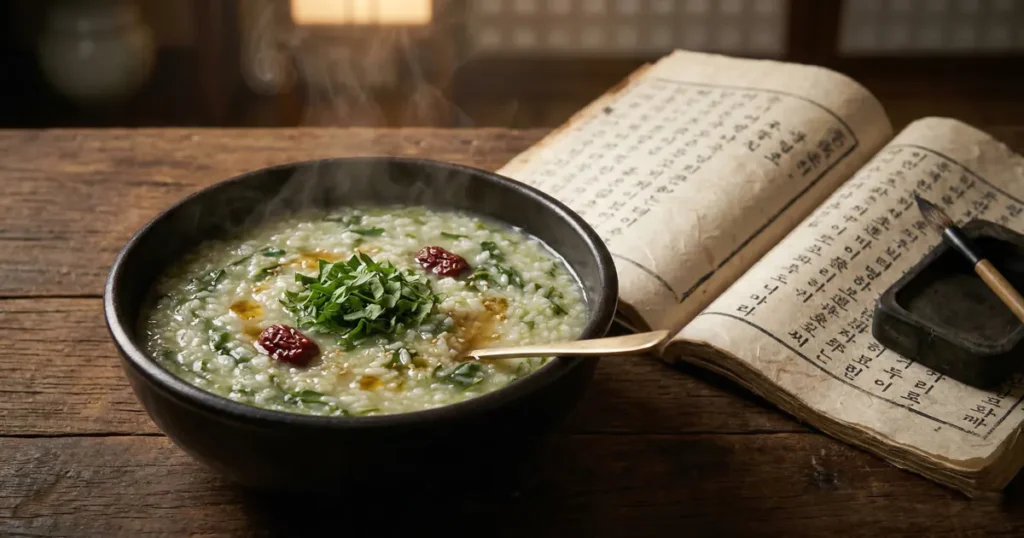
In Korean history, Naengi has been recorded as one of the most humble yet resilient plants. Growing wild in mountains and fields since ancient times, this herb was the quintessential “relief plant” that helped people survive the Borigogae (the spring hunger gap) when food was scarce. In the Hyangyak Jipseongbang (Compendium of Native Korean Prescriptions), compiled in 1433 during the reign of King Sejong, the efficacy of Naengi as a medicinal herb native to our land is recorded in detail. Records show that during famine years, commoners would dig it up to make porridge to stave off hunger.
However, Naengi was valued as more than just emergency rations; it was highly regarded as a medicine to manage the body’s energy. According to the Dongui Bogam (Principles and Practice of Eastern Medicine), compiled by Heo Jun in 1613:
“Its nature is warm, its taste is sweet, and it is non-toxic. It facilitates the flow of Liver Gi, puts the middle burner (digestive system) at ease, and comforts the five viscera. It grows in fields and plains and does not die even in winter. If eaten as a porridge, its energy leads the blood to the liver and brightens the eyes.”
This shows that our ancestors viewed Naengi not just as a vegetable, but as a prescription to restore the body’s balance.
Where Cruciferous Resilience Meets Korean Cooking
Botanically, Naengi is a cruciferous vegetable rich in vitamins A, C, and K, boasting a particularly high calcium content. Because of these nutritional properties, it has long been called “the ginseng of spring” in Korea. An interesting point is that terpenes, the aromatic components of Naengi, are not easily destroyed by high heat; instead, their flavor is amplified when paired with soybean paste (doenjang) or oil.
Because of these characteristics, Korean recipes have evolved to either trap or maximize the fragrance of Naengi. While it was once simply salted to increase its shelf life, modern cooking focuses on sophisticated ways to extract its aroma.
Three Recipes to Maximize the Flavor of Naengi
1. The Synergy of Soybean Paste: Naengi Doenjang-guk (Soup)
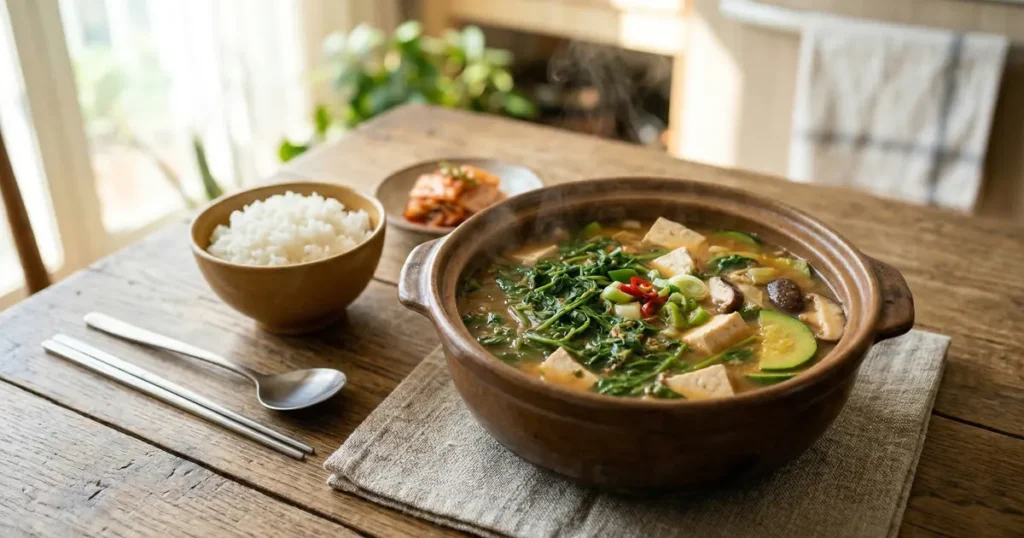
The most iconic dish is Naengi Doenjang-guk. The savory, salty taste of fermented soybean paste perfectly complements the bitter yet fragrant “earthy scent” of the herb. When added to an anchovy broth with doenjang, the essential oils of the Naengi spread through the liquid, completing a deep, flavorful profile.
- Ingredients: 100g Naengi, 2 tbsp Doenjang, 800ml anchovy broth, 1/2 block of tofu, 1 tsp minced garlic.
- Method: 1. Dissolve the doenjang into the anchovy and kelp broth. 2. Once boiling, add the cubed tofu. 3. Finally, add the cleaned Naengi and boil briefly for 2–3 minutes. (Boiling too long will cause the aroma to evaporate.)
2. The Crunchy Vitality of Spring: Naengi Muchim (Seasoned Salad)
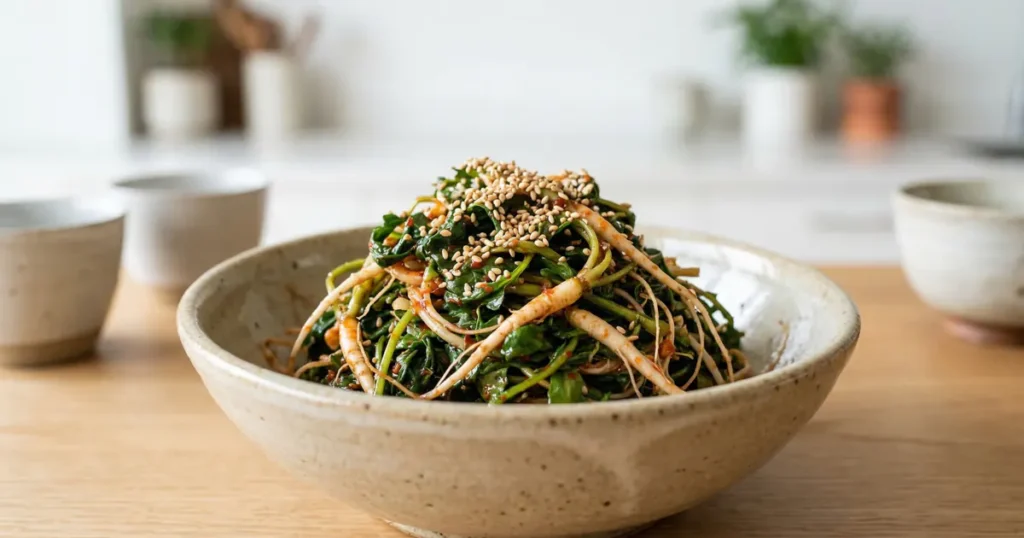
This involves blanching the Naengi slightly and tossing it with red chili paste (gochujang), doenjang, or salt. Adding a splash of vinegar can reduce the loss of vitamin C while adding a refreshing tang. The pungent burst from the roots with every bite is the quintessential “taste of spring.”
- Ingredients: 150g Naengi, 1 tbsp Gochujang, 1 tbsp plum syrup, 1 tbsp vinegar, sesame seeds.
- Method: 1. Add a pinch of salt to boiling water and blanch the Naengi (roots first) for about 1 minute. 2. Rinse immediately in cold water and squeeze out the excess moisture. 3. Toss with the seasoning. A drop of sesame oil at the end creates a perfect balance.
3. Rediscovering Texture: Naengi-jeon (Pancake) and Fritters
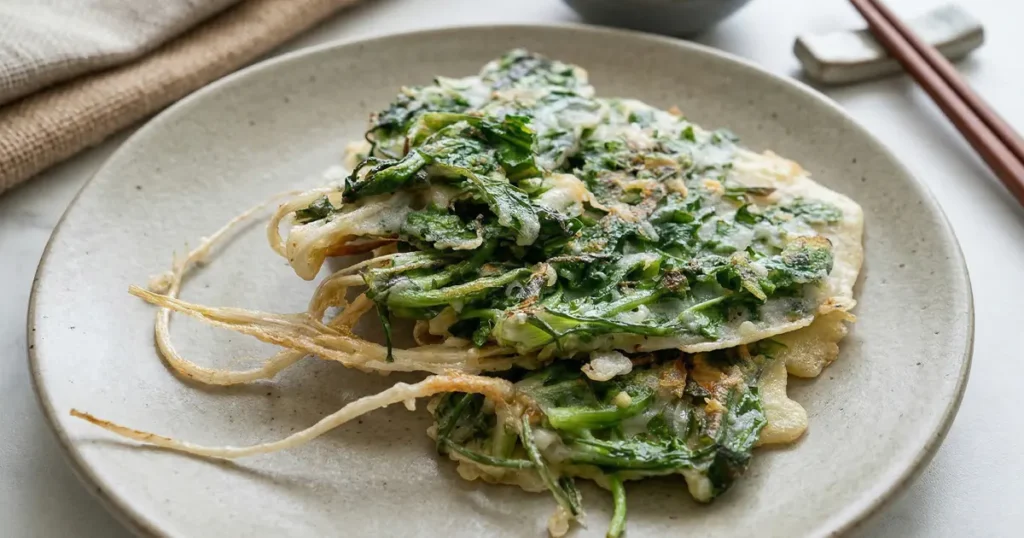
Recently, Naengi-jeon (mixing it into flour batter and pan-frying) or whole-root fritters have become popular. When cooked at high temperatures, the scent of Naengi becomes more concentrated, and the texture becomes delightfully crispy.
- Ingredients: 100g Naengi, 1 cup pancake mix, 3/4 cup cold water, red chili (optional).
- Method: 1. Mix the pancake powder with cold water (adding an ice cube makes it crispier). 2. Dip the cleaned Naengi into the batter and place on a heated pan. 3. Pan-fry over medium heat until golden brown. You’ll get a “twist” in texture: chewy roots and crispy leaves.
🏁 Conclusion: A Gentle Annual Invitation
Naengi has a mysterious power; you might forget about it most of the year, but as soon as the spring breeze blows, you think, “Ah, I’d love a bowl of that fragrant soup.” This small herb, which survived the winter with the resilience of a cruciferous plant, may not be a grand reward, but it is certainly a welcome signal that the seasons are changing on our dinner tables.