
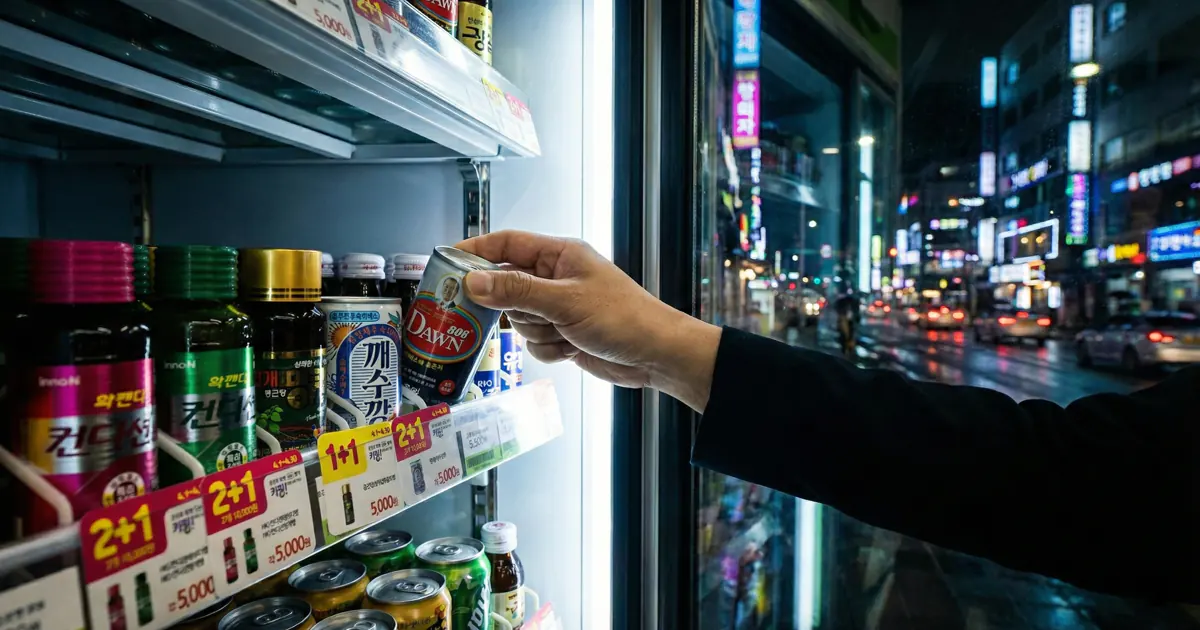
One of the most fascinating sights for visitors to Korea is the resilience of Korean office workers. People who were out until the early hours, going through multiple rounds of drinks, show up at their desks the next morning in crisp shirts — as if nothing ever happened. It is not exactly a miracle but rather a series of deeply ingrained routines believed to support the body’s recovery and speed up alcohol metabolism. Here is a look at the very real, everyday rituals Koreans use to navigate the aftermath of a night out.
The Invisible Shield from the Convenience Store 🥤
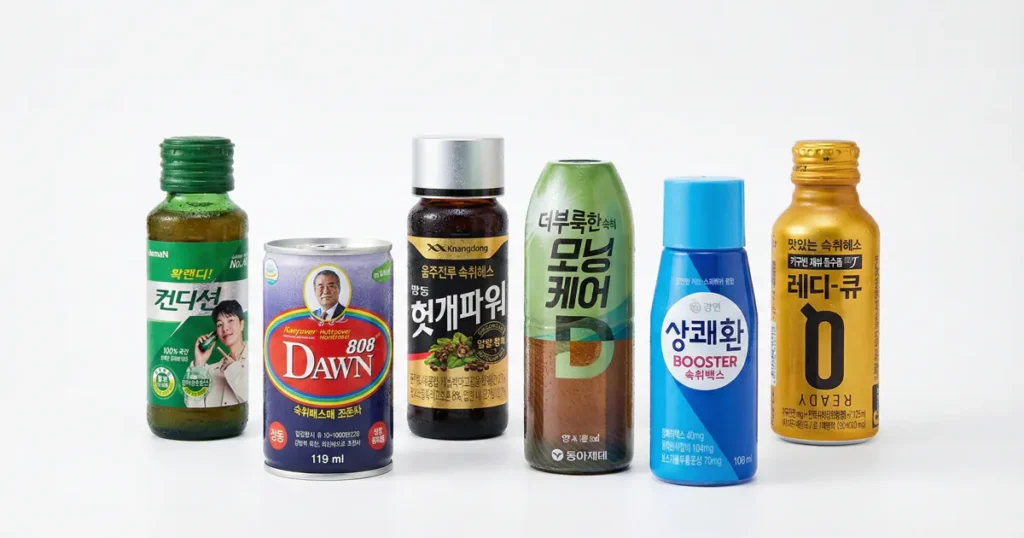
Korean hangover prevention actually starts before the first glass is even poured. The hangover cure section of a local convenience store serves as an essential stop for many. People often down a functional tonic before drinking to protect the liver, or grab another on the way home to prepare for the morning ahead. Many believe these drinks help the body metabolize alcohol more efficiently. Lately, portable jellies or pill packets have become increasingly popular, and it is common to see colleagues passing them around mid-party like a quiet survival ritual shared to make sure everyone makes it through the next day.
The Classic Strategy of Hot Broth 🥘
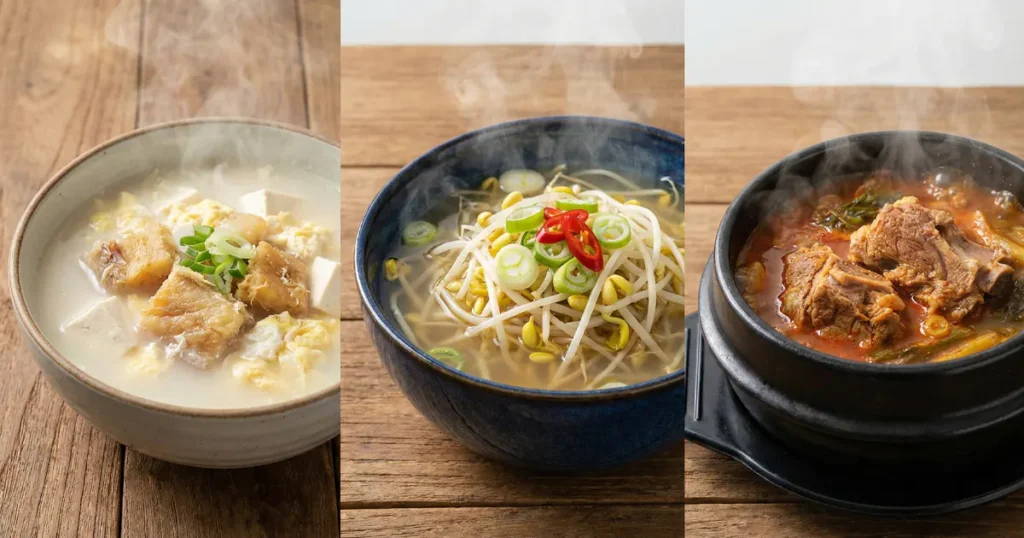
Even with the best preparation, the morning-after struggle is often unavoidable, and the gold standard for relief is hot soup. In Korea, Haejang-guk (hangover soup) is its own culinary category with endless varieties. For those seeking something light and soothing, bean sprout soup or dried pollack (a type of cod) soup are popular choices. Bean sprouts contain asparagine, which is believed to support liver function and help the body recover more quickly. Others prefer a heartier approach, opting for spicy, meat-heavy stews like pork bone soup or tripe soup. Sweating over a steaming bowl creates a feeling of cleansing, which sits at the heart of the Korean recovery experience.
Modern Alternatives Based on Personal Taste 🍕
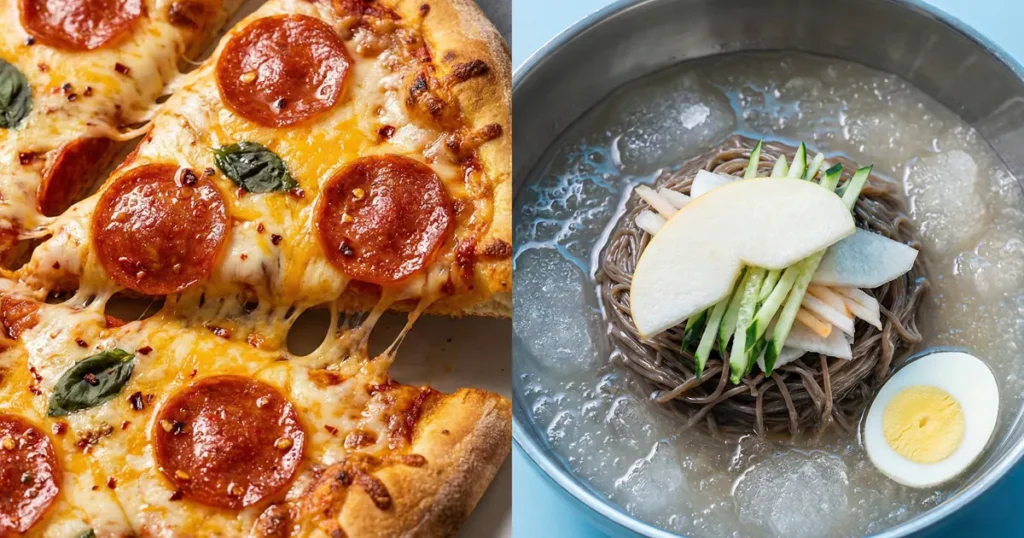
Not everyone sticks to the traditional bowl of soup. A growing number of people swear by the greasy-cure method, reaching for pizza or burgers. The logic, according to popular belief, is that the fat from cheese and patties helps settle the stomach and ease acidity. On the opposite end of the spectrum is the cold noodle faction. These individuals turn to the icy, tangy broth of naengmyeon (cold buckwheat noodles) to instantly quench thirst and cool the body. Ultimately, the Korean approach is less about a strict rulebook and more about listening to what one’s body needs to reset its balance.
🏁 Conclusion: The Ritual of Showing Up

The hangover culture in Korea is more than just a set of survival tactics. From the quiet preparation before the party to the steaming bowl of soup the next morning, it is a process of restoration. It is about recalibrating a body that ran too hot the night before to face the reality of the new day.
Whether it is bean sprouts, pizza, or cold noodles, there is no single right answer. What matters is the act of finding one’s own way back to normalcy. In a society that values endurance and responsibility, showing up the next morning is sometimes the most important ritual of all. Perhaps the true secret of the Korean hangover cure is not the food itself, but the collective grit to carry on with the day as if nothing ever happened — and to do it all over again.