
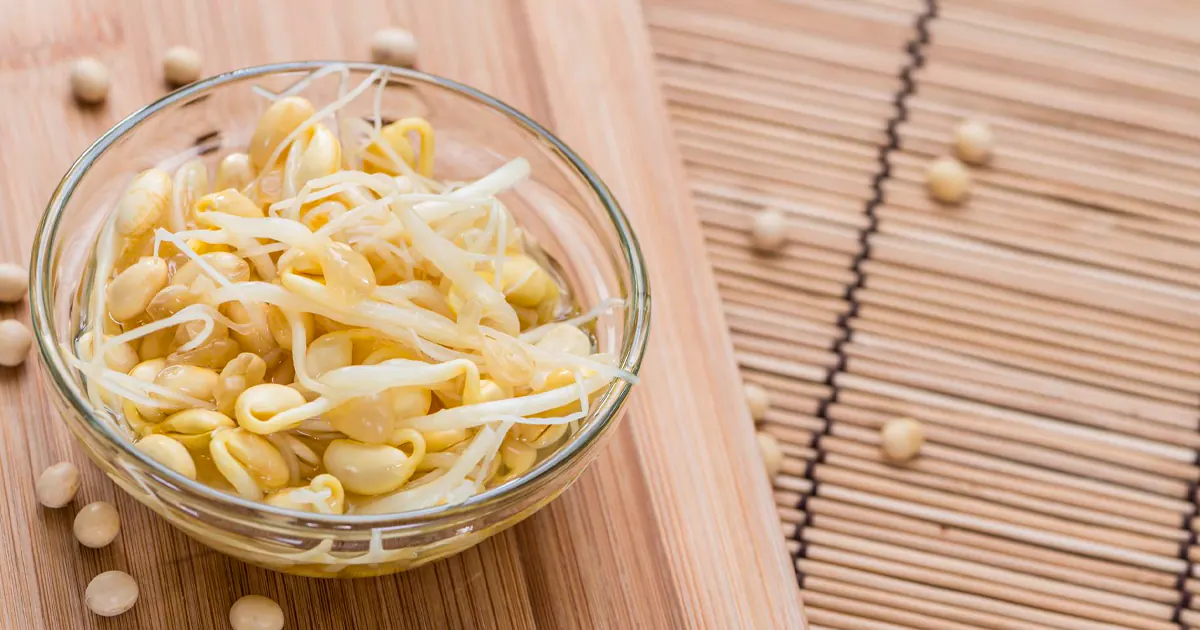
Have you ever smelled the fragrant aroma of soybean sprouts cooking until transparent in a bubbling earthenware pot in the early morning? They are a “savior” that washes away the previous night’s hangover, the “finishing touch” that completes the texture of bibimbap, and a reliable friend that fills the dining table at an affordable price.
However, an interesting fact is that Korea is nearly the only country in the world that treats soybean sprouts as a protagonist on the dining table. In neighboring Japan, China, or the Western world, people mostly consume “mung bean sprouts” (Sukju) instead. This is because the hardness of the round heads and the unique “beany” scent of soybean sprouts often feel quite unfamiliar to them.
Why did Koreans become so obsessed with these sprouts with yellow heads? Beyond a simple difference in palate, there lies a wise survival strategy that overcame a barren history and the challenge of that specific beany smell.
The Birth of Kongnamul: Survival in Sacks of Beans 🌱
The history of Korean Soybean Sprouts stretches back much further than modern recipes suggest, rooted in the very survival of the nation. Historical lore points back to 935, the founding era of the Goryeo Dynasty. It is said that when King Wang Geon’s soldiers were struggling with famine and disease, he ordered them to soak soybeans in water to grow sprouts. This “emergency ration” saved the army and, eventually, the common people.
This wasn’t just a lucky guess. While a dry soybean contains no Vitamin C, the magic happens during germination. As the sprout grows, it synthesizes Vitamin C rapidly—reaching levels of 10 to 20mg per 100g. In the biting cold of Korean winters, when fresh greens were non-existent, these sprouts were the thing preventing scurvy. You could say Kongnamul was Korea’s first “bio-hack” for surviving the elements.
Why Did the Rest of the World Look Away? 👃
If they are so healthy, why didn’t Kongnamul go global centuries ago? The hurdle was the “beany/fishy” smell. Unlike the milder mung bean sprout, soybean sprouts contain fatty acids that, when oxidized, produce a strong scent that many cultures found off-putting.
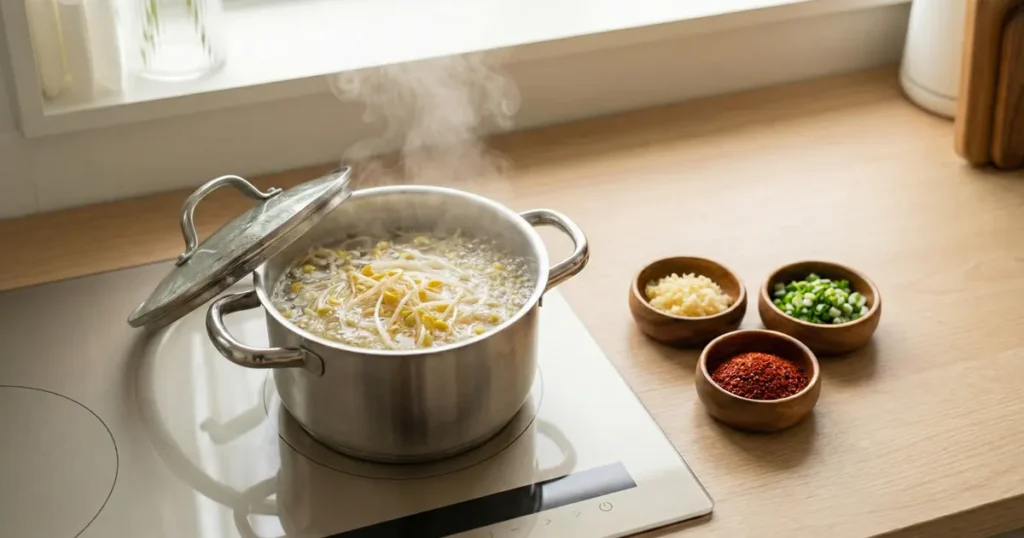
However, Koreans developed two “Golden Rules” to conquer this:
- The Lid Rule: To prevent the fishy smell from setting in, you must either keep the pot lid tightly closed throughout the entire boiling process or leave it completely open. This ensures the volatile scent compounds either transform through heat or escape entirely.
- The Spice Harmony: By pairing the sprouts with bold aromatics like garlic, green onions, and red pepper flakes, Koreans neutralized the remaining “beany” notes and highlighted the sprout’s natural nuttiness.
Through these techniques, the “smell” that others avoided was transformed into the “savory depth” that Koreans crave.
From Industrial Protein to 2026’s Wellness “Cheat Key” 🛒

The role of Kongnamul has shifted dramatically over the decades, yet its importance remains constant.
- The 1970s Perspective: During the rapid industrialization of the 70s, Kongnamul was the “meat of the poor.” It provided essential protein and vitamins to factory workers and urban families who couldn’t afford beef. A few hundred won could buy a massive bag, enough to feed a family for days.
- The 2026 Perspective: Even in 2026, amid fluctuating global food prices and rising health-conscious consumption, Kongnamul remains one of the most economically stable ingredients in Korea. While the price of many fresh vegetables can spike sharply during seasonal cold waves, a standard bag of soybean sprouts consistently stays within the 1,000–2,000 KRW range.
What was once regarded as a “survival ration” has quietly repositioned itself as a practical wellness staple — low in calories, high in fiber, and nutritionally efficient. Its continued relevance lies not in trend-driven popularity, but in structural reliability: affordability, indoor cultivability, and year-round availability.
Whether it’s the 10th century or the 21st, the cause-and-effect remains the same: because Kongnamul is easy to grow indoors regardless of the season, it remains the most reliable source of nutrients for the Korean people.
🏁 Conclusion: A Humble Staple with a Golden Heart
To wrap it all up, Kongnamul is a historical survivor from the Goryeo era that became a culinary icon through Korea’s unique ability to tame its scent and maximize its nutrition. It is a testament to how a culture can take a challenging ingredient and turn it into a national treasure that provides both physical health and economic relief.