
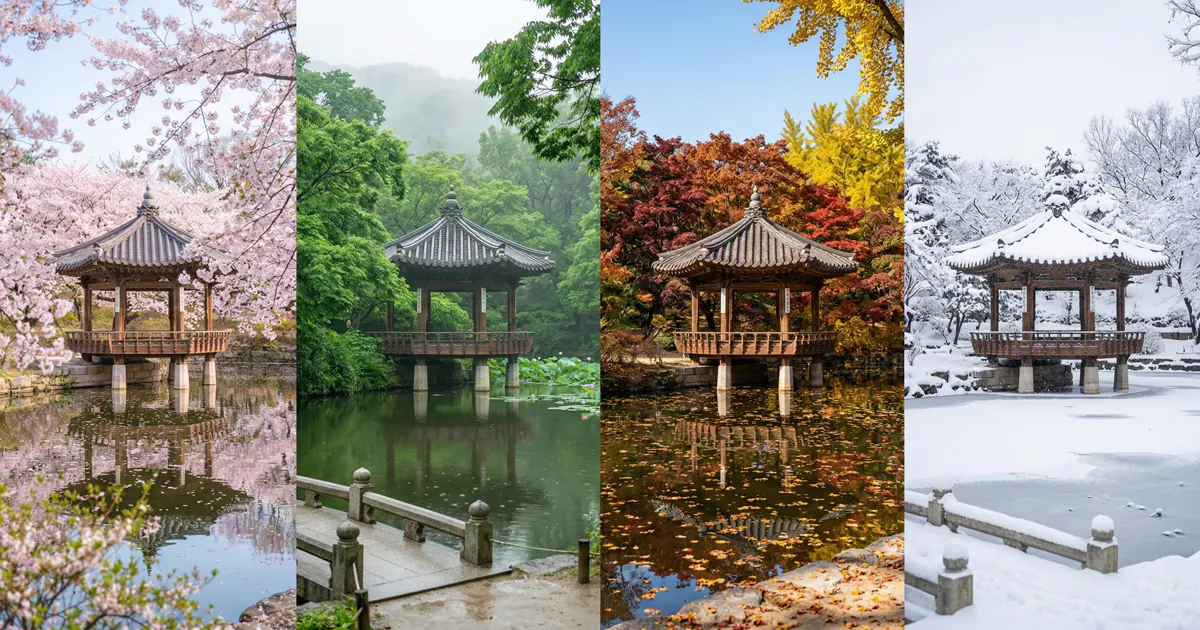
Planning a trip to Korea? You’ve picked a fascinating place where the landscape transforms completely every few months. Whether you’re chasing cherry blossoms or bracing for Siberian winds, here is your definitive, data-backed guide to surviving and thriving in Korea’s dynamic climate.
If you’re looking for a “one-size-fits-all” wardrobe for Korea, I have some news: you’re going to need a bigger suitcase. Korea features a Temperate Monsoon climate, meaning four very distinct seasons. Recent data (2020–2025) shows an extreme annual temperature gap of over 50°C—swinging from a bone-chilling -18.6°C in winter to a sweltering 38.0°C in summer.
🌸 Spring: March ~ May
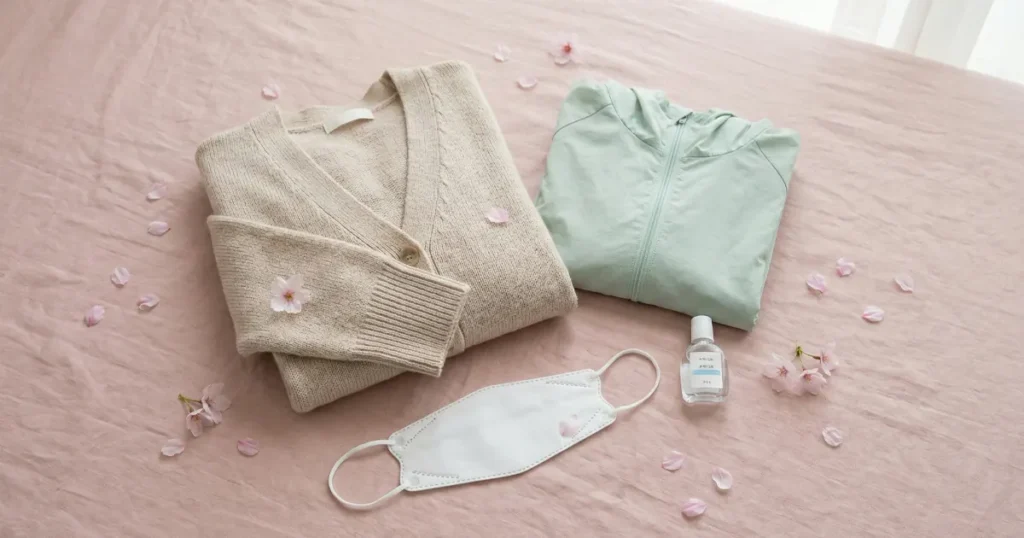
- Average Temperature: Low 8.7°C / High 19.0°C
- Highest/Lowest Records: 31.2°C ~ -8.1°C
- Diurnal Range: 10.3°C (Largest among the four seasons)
- Features:
- Watch out for the Diurnal Range: It is warm during the day, but quite chilly in the morning and evening. Since there are many days when the temperature difference exceeds 10 degrees, layering clothes is essential.
- Kkot-saem-chu-wi (Early Spring Cold Snap): In early March, a “cold snap” can occur where the temperature suddenly drops below zero (a record of -8.1°C exists), so be careful.
- Yellow Dust: This is a period when fine dust and yellow dust flowing inland are severe. Measures to protect the respiratory system are necessary.
- Essentials: Mask for yellow dust (KF94), light outerwear (cardigan, windbreaker), artificial tears.
☀️ Summer: June ~ August
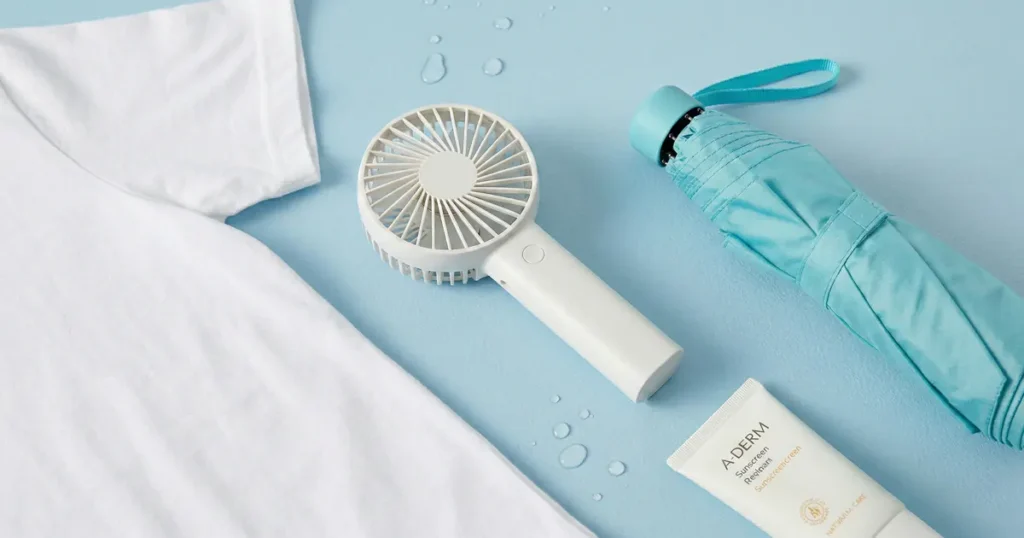
- Average Temperature: Low 22.7°C / High 29.9°C
- Highest/Lowest Records: 38.0°C (Highest) ~ 13.3°C
- Diurnal Range: 7.2°C (Smallest among the four seasons)
- Features:
- Hot and Humid: It is characterized by “steamy heat” where humidity rises above 80%. “Tropical nights,” where the night temperature stays above 25°C, are frequent and can easily lead to exhaustion.
- Jangma (Monsoon Season): There is a monsoon season between late June and July with heavy concentrated rainfall. August may be affected by typhoons.
- Essentials: Portable umbrella, breathable cotton/linen clothing, sunscreen, portable fan.
🍂 Autumn: September ~ November
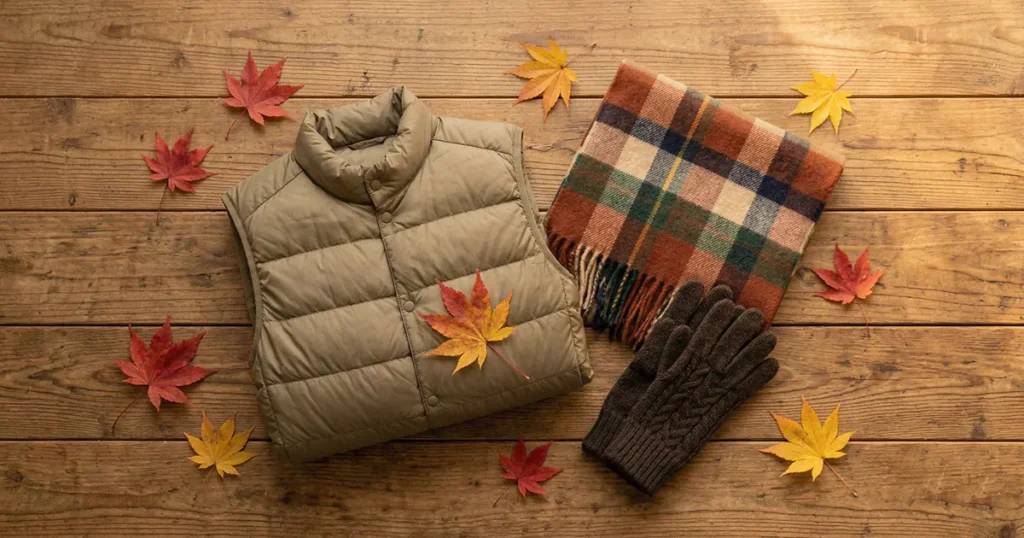
- Average Temperature: Low 11.8°C / High 20.5°C
- Highest/Lowest Records: 34.6°C ~ -8.1°C
- Diurnal Range: 8.7°C
- Features:
- Pleasant Weather: This is the most suitable season for outdoor activities and travel. The nationwide autumn foliage season starts from late October.
- Late Heat and Sudden Drop: In early September, late heat waves reaching a maximum of 34.6°C may appear, but as it enters November, the temperature drops sharply and enters the sub-zero range.
- Essentials: Thin padding or jacket for layering, scarf, hiking boots (for viewing autumn leaves).
❄️ Winter: December ~ February
- Average Temperature: Low -3.7°C / High 4.7°C
- Highest/Lowest Records: 18.3°C ~ -18.6°C (Lowest)
- Diurnal Range: 8.5°C
- Features:
- Very Cold Weather: Average sub-zero temperatures persist. When influenced by the Siberian cold wave, it drops below -15°C, so you must put all your effort into staying warm.
- Dryness: The atmosphere is very dry, making it easy for skin to chap or dry eye syndrome to occur. Dryness due to indoor heating is also severe.
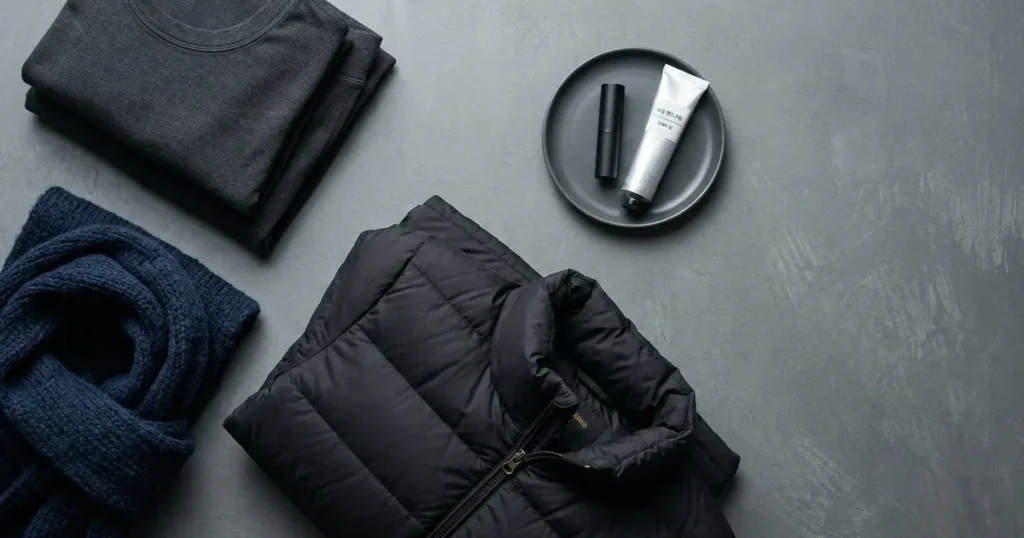
- Essentials: Heavy coat (puffer jacket), thermal underwear (Heattech), gloves, scarf, high-moisture lotion/lip balm.
❓ Frequently Asked Questions (FAQ)
- Q1. Which month is meteorologically the best to visit Korea?
- Based on the data, October is highly recommended as the diurnal range is moderate and the temperature is pleasant. It also has low precipitation, making it optimal for outdoor activities.
- Q2. When exactly does the “Kkot-saem-chu-wi” (early spring cold snap) occur?
- It mainly occurs between early and mid-March. Since the weather, which was getting warmer, suddenly drops below zero, visitors during this period should not completely put away their winter clothes.
- Q3. Does it only rain during the summer monsoon season in Korea?
- In the past, it rained all month long, but recently it often takes the form of “guerrilla rainstorms” that fall shortly and strongly. When it is not raining, it is very humid and hot.
- Q4. Which season is harder to prepare for, summer or winter?
- It depends: summer if you are sensitive to humidity, winter if you are sensitive to cold. However, Korea has very well-equipped indoor heating and cooling facilities, so there is no great difficulty as long as you have the appropriate clothing.