
In Korea, a child’s first birthday, known as Doljanchi, is far more than just a party. Historically, a pile of gold rings on one side of the banquet table represented the shining blessings bestowed upon the child by relatives and friends. However, the scene at Korean jewelry stores has changed significantly of late. Amidst skyrocketing gold prices, I’d like to explore how this long-standing tradition is transforming and what it reveals about modern Korean life from a local perspective.
1. Why Gold Rings? – A Wish for Resilience Wrapped in Unchanging Value 💍
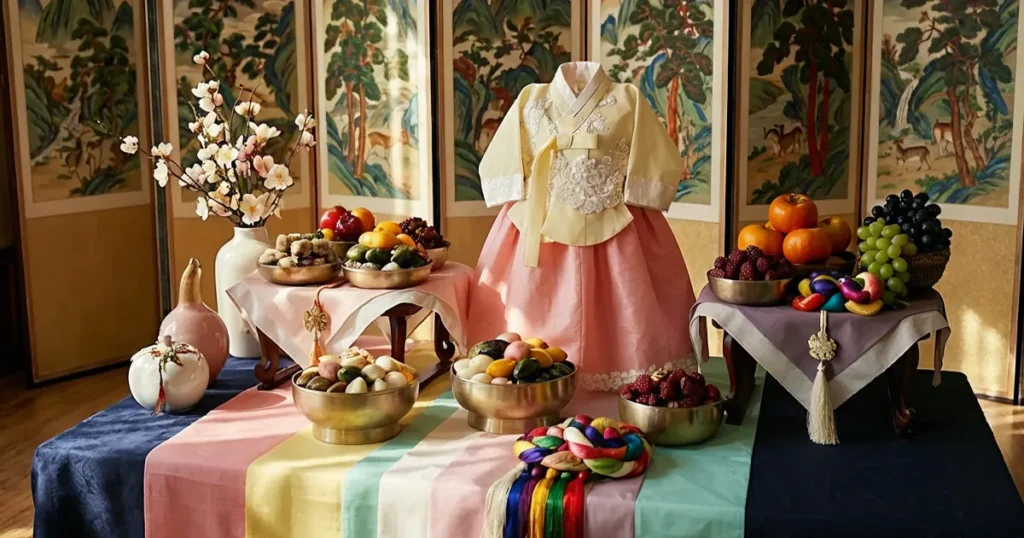
The culture of giving gold rings on a first birthday began as a way for those around the child to pray for their longevity and good fortune. In the past, when infant mortality rates were high, gifting gold—a material of unchanging value—to a child who had survived their first year was a way to wish them a smooth and sturdy life ahead. Furthermore, these rings served as a financial safety net. There is a deep-seated practicality in Korean culture: giving a realistic asset that can be readily converted into cash whenever the child might need it in the future. It was a precious token of blessing from grandparents, relatives, and friends who would watch the child grow.
2. The 3.75g Promise Falters – Defining ‘Don’ and Economic Pressure 📈

For a long time, the standard size for a first birthday ring in Korea was one “don.” Here, “don” is a traditional Korean unit of measurement for gold or medicinal herbs, where 1 don equals approximately 3.75 grams (about 0.13 oz). It was a social contract of sorts; if you were a close relative, gifting a one-don ring was the expected norm. However, as gold prices rose sharply after the 2000s, this unwritten rule began to crack. As the price of one don reached a burdensome level, people started seeking “ban-don” (half-don, or 1.875g, about 0.066 oz) rings instead. It was a realistic compromise for Koreans who wanted to keep the tradition alive without diminishing their celebratory spirit.
3. From 1g Minimalism to ‘Gold Beans’ – An Era of Extreme Downsizing 📉

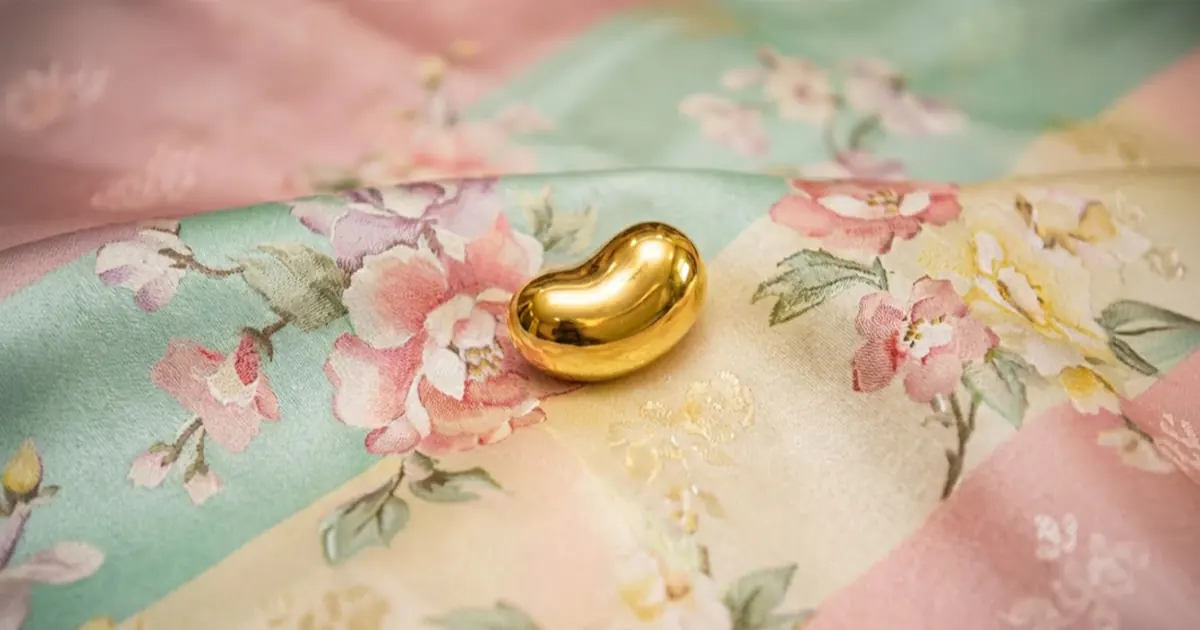
In recent years, amid global inflation, gold prices in Korea have surged to the point where one don (3.75g) now exceeds 400,000 KRW (approximately $300 USD). As even a half-don ring has become a financial burden for both the giver and the recipient, the market has responded with 1g gold rings. To further reduce craftsmanship costs, some consumers have opted for 1g “Gold Beans,” abandoning the ring form altogether.
Rather than signaling the disappearance of tradition, this shift illustrates how Koreans are recalibrating long-standing customs to adapt to a high-cost economic environment.
4. Choosing Efficiency over Symbolism – A Practical Reinterpretation of Tradition 💸

Ultimately, the gold ring itself is becoming a rarer sight at modern Korean first birthday parties. When considering the labor costs and taxes added to a single ring, many people now find it more helpful to simply give the equivalent amount of cash in an envelope. This is not necessarily the death of tradition, but rather evidence of how Korean society is reinterpreting customs by prioritizing efficiency over symbolism. The gold ring, once the ultimate icon of tradition, is yielding its place to cash—the most rational asset in an era of economic pressure.
🏁 Conclusion: Though the Form Changes, the Blessing Remains
The way the Korean gold ring tradition has shrunk from one don to half-don, then to 1g beans, and finally to cash envelopes, reflects the shifts in the Korean economy. The number of yellow gold rings on a baby’s finger may be fewer than before, but the heart of the relatives and friends who sincerely wish to celebrate that first year of life remains as bright and clear as any precious metal.
While the methods of gifting have become more practical and direct under the waves of high interest rates and inflation, the essence of the blessing remains unchanged. Is there a special celebratory tradition in your country that has changed its form due to economic or social shifts? I’d love to hear your stories in the comments.