
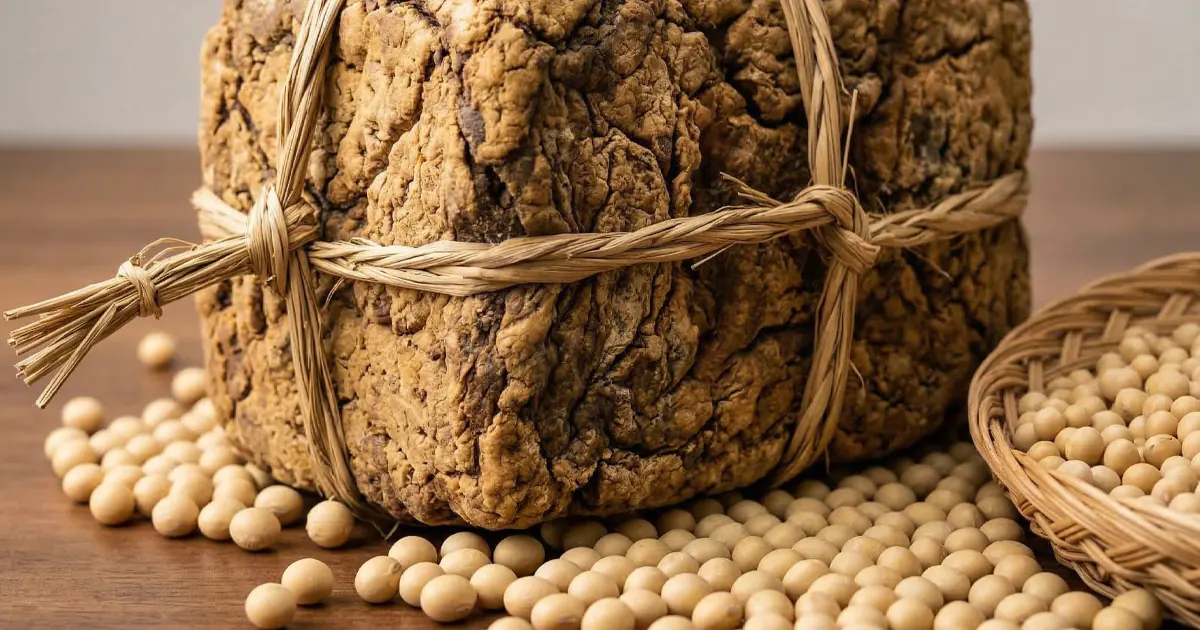
In late autumn, when the air turns crisp, rows of brown Meju bricks tied with rice straw hang quietly under the eaves of houses in the Korean countryside.
These rustic soybean bricks are made by boiling soybeans in large cauldrons, mashing them while still hot, and shaping them firmly by hand before leaving them to ferment in the open air. What might appear to be a simple preservation method is actually a seasonal tradition deeply rooted in Korean food culture.
As the Meju slowly ferments, it absorbs beneficial microorganisms from the surrounding environment. Over time, these humble bricks become the foundation of Korea’s most essential fermented seasonings—Doenjang (soybean paste), Ganjang (soy sauce), and Gochujang (red chili paste).
The Golden Gem ‘Baektae’ and the Science of Fermentation
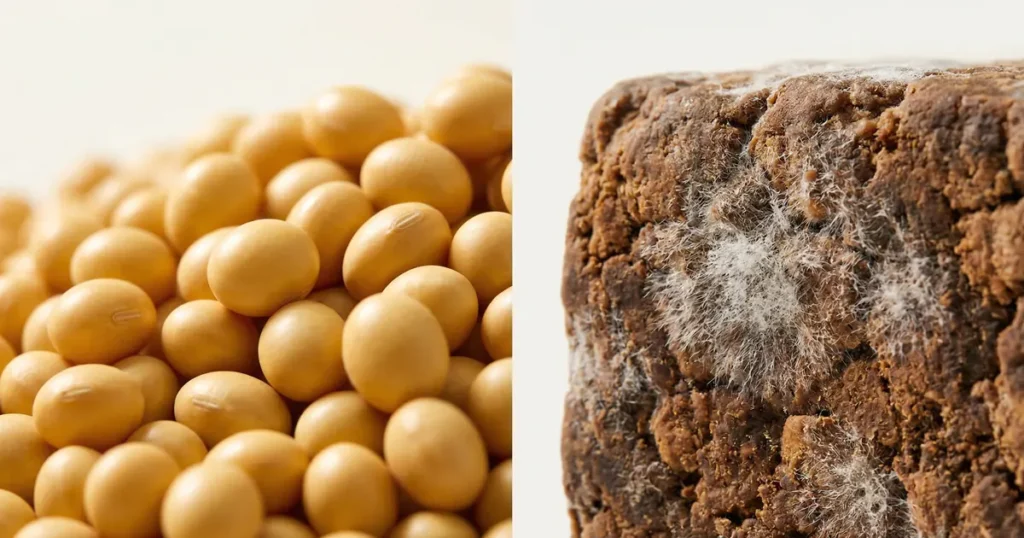
The primary ingredient of Meju is Baektae, commonly known as “yellow soybeans.” These beans, boasting exceptionally high protein content, are washed, soaked, and boiled until tender. Once cooked, they are mashed while still hot, shaped into bricks, and then placed on or hung with rice straw to undergo aging and fermentation.
During this stage, Bacillus subtilis—a beneficial bacterium residing in rice straw—penetrates the Meju. These bacteria break down the soybean protein to produce Glutamic acid, a type of amino acid. This means our ancestors were naturally extracting the core component of Monosodium Glutamate (MSG), the modern synonym for “umami,” through natural fermentation thousands of years ago. This is the magical point where the simple savoriness of the bean meets microorganisms to transform into a deep, lingering umami flavor.
The “Jang” Culture: Blossoming from the Roots of Meju
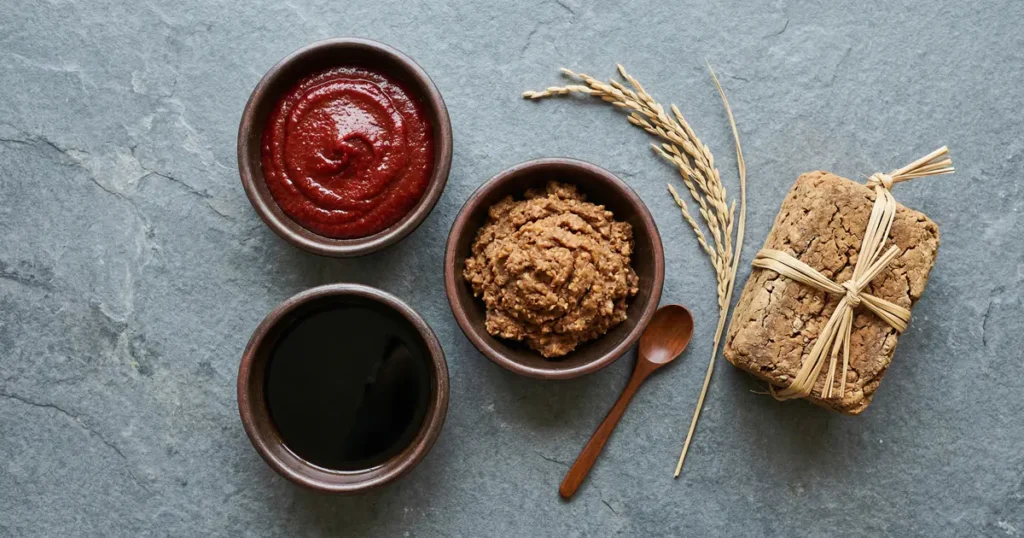
A well-fermented Meju is not a finished product in itself but a powerhouse that diverges into three essential Korean seasonings:
- Ganjang (Soy Sauce): A “black jewel” created by soaking Meju in brine, fermenting it, and then straining and boiling the liquid.
- Doenjang (Soybean Paste): The solid remains of Meju after the Ganjang liquid is removed, crushed and mixed with salt, then aged into a thick, nutty paste.
- Gochujang (Red Chili Paste): A uniquely Korean spicy-sweet fermented condiment made by mixing Meju powder with chili powder, glutinous rice, and malt.
- Cheonggukjang: A “fast-track” fermented paste made by fermenting beans for only 2–3 days without long-term drying.
- Ssamjang: A dipping sauce made by blending Doenjang and Gochujang with garlic and sesame oil—a perfect harmony of two Meju-derived pastes.
A Superfood: Moving Beyond ‘Taste’ to ‘Science’
1. Guardian of Gut Health: The Natural Probiotic ‘Hay Bacillus’ Bacillus subtilis (Hay Bacillus), which flourishes during fermentation, drastically improves the intestinal environment.
- Strong Survivability: Unlike typical lactic acid bacteria, it forms “spores” resistant to heat and acid, allowing it to pass through stomach acid and reach the intestines safely.
- Inhibiting Harmful Bacteria: It suppresses putrefactive bacteria in the gut and promotes the growth of beneficial microbes, boosting immunity.
2. Maximizing Antioxidants: The Transformation of ‘Isoflavones’ Isoflavones, the key component of soybeans, transform into a shape that is much more easily absorbed by the body during fermentation.
- Absorption Innovation: In raw beans, isoflavones exist as “glycosides” (bonded with sugar), making them hard to absorb. During fermentation, microbes remove the sugar, converting them into Aglycones, which have a significantly higher absorption rate.
- Enhanced Function: This transformation makes the anti-cancer, antioxidant, and osteoporosis-preventing effects far more powerful than in the raw state.
3. The Ultimate Protein Absorption: The ‘95% Rule’ Even with high-protein beans, the amount retained by the body varies greatly depending on how they are prepared:
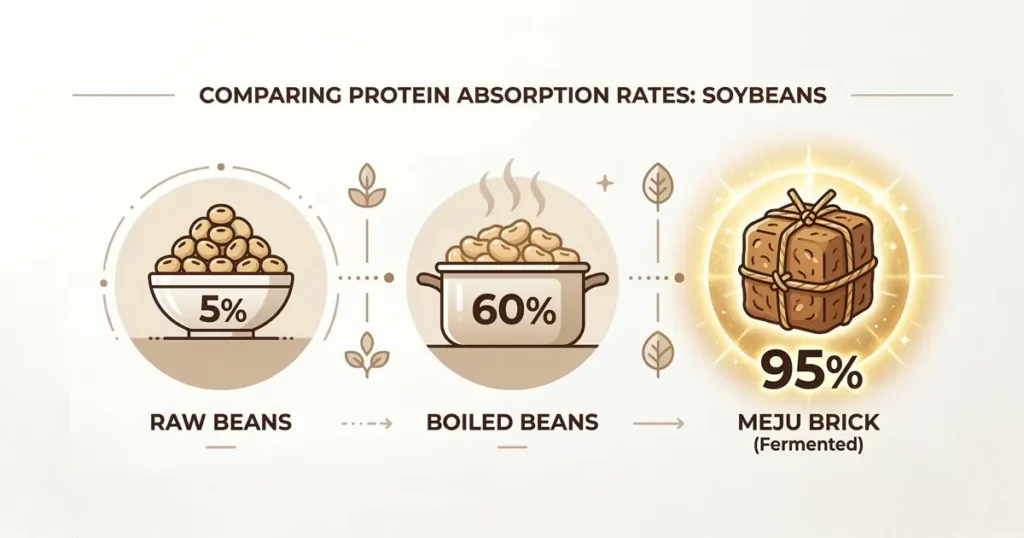
- Raw Beans: Absorption is less than 5% due to digestive enzyme inhibitors.
- Boiled Beans: Even with heat, absorption stays around 60%.
- Meju (Fermented Beans): Because microbial enzymes (Protease) pre-digest the massive soybean proteins into tiny amino acids and peptides, the absorption rate exceeds 95%.
🏁 Conclusion: Perfecting Traditional Flavor through Science
Meju is far more than a simple ingredient used to make sauces. Through fermentation, it transforms ordinary soybeans into a nutrient-rich food while creating the deep umami flavors that define Korean cuisine.
What Korean ancestors discovered through centuries of experience—how fermentation enhances flavor and nutrition—has today been supported by modern food science.
Behind its rough exterior lies a remarkably sophisticated fermentation process. From Meju emerge the essential seasonings that shape the Korean table, quietly supporting the entire landscape of Korean flavors.