
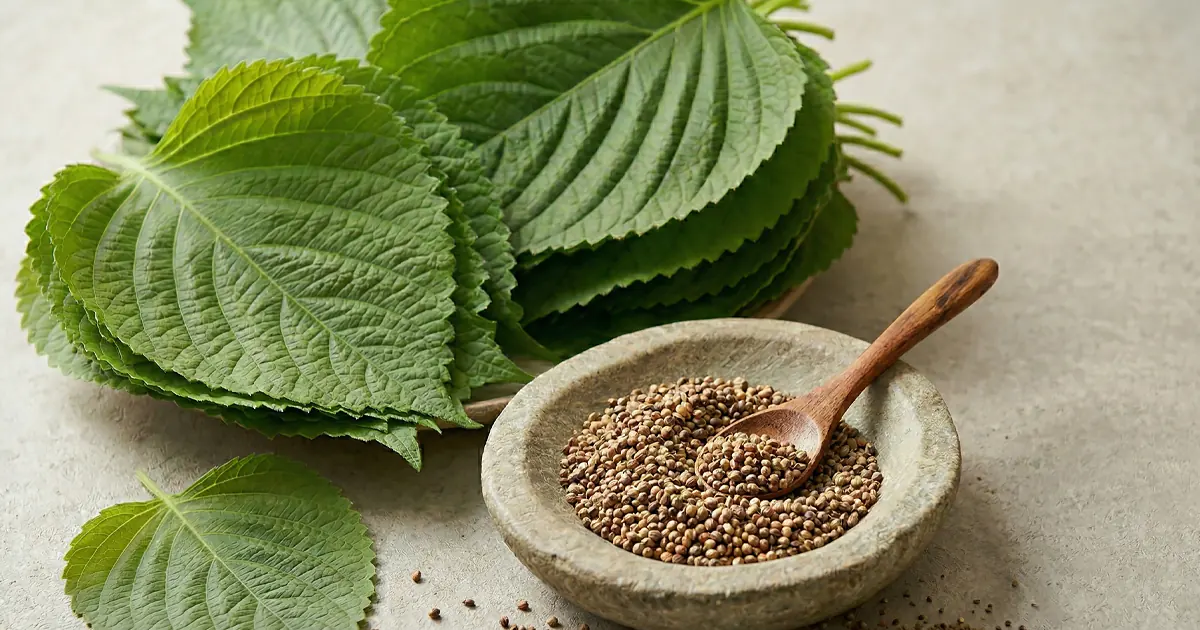
Do you remember the “Perilla Leaf Debate” that once set Korean online communities and variety shows ablaze? This seemingly trivial question—Is it acceptable for your partner to help your friend separate two perilla leaves that are stuck together?—symbolically highlights just how deeply perilla leaves are woven into the daily eating habits of Koreans. These thin leaves are such a constant presence on the dining table that they can even spark a lighthearted debate about relationship boundaries.
Perilla, Not Sesame 🔍
Many people abroad mistakenly translate this ingredient as “sesame leaves,” but this is incorrect. What Koreans eat is not the leaf of the sesame plant, but perilla (kkaennip). Botanically, perilla belongs to the Lamiaceae (mint) family and is an entirely different species from sesame. While some in the West call it “Korean cilantro” due to its potent aroma, nutritionally it qualifies as a true powerhouse ingredient.
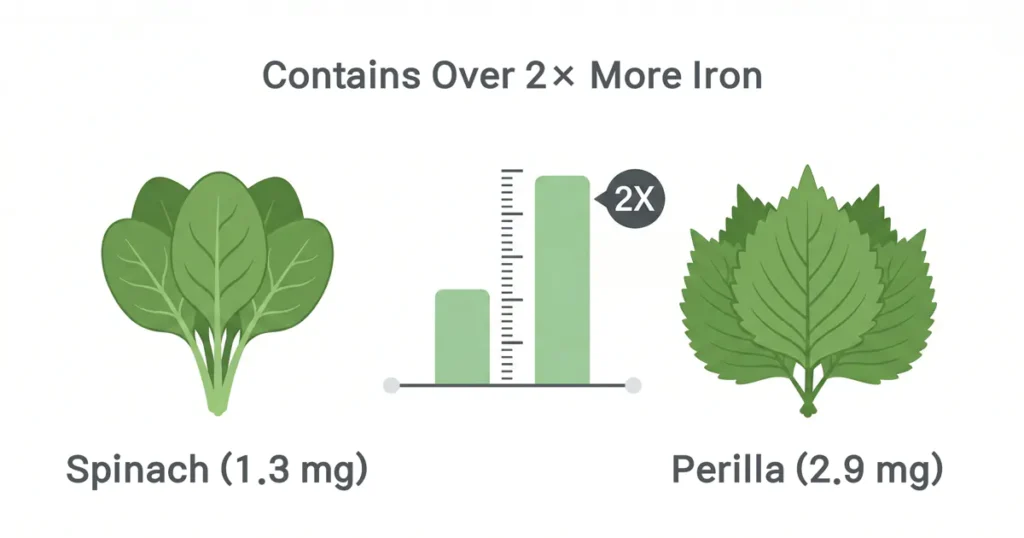
An Iron-Rich Leaf: Perilla leaves contain about 2.9 mg of iron per 100 g, ranking among iron-rich leafy vegetables—roughly twice the amount found in spinach.
Potential Antioxidant and Cognitive Benefits: Rich in beta-carotene and rosmarinic acid, perilla leaves provide strong antioxidant properties. Some studies also suggest they may support cognitive health.
Natural Food-Safety Support: The aromatic compound perilla ketone acts as a natural preservative, helping reduce the risk of food spoilage, especially during Korea’s humid summer months.
Why Are Koreans Drawn to This Intense Aroma? 🌿
Korea is virtually the only country where perilla leaves are consumed as a mainstream vegetable. This preference is rooted in cultural and culinary history.
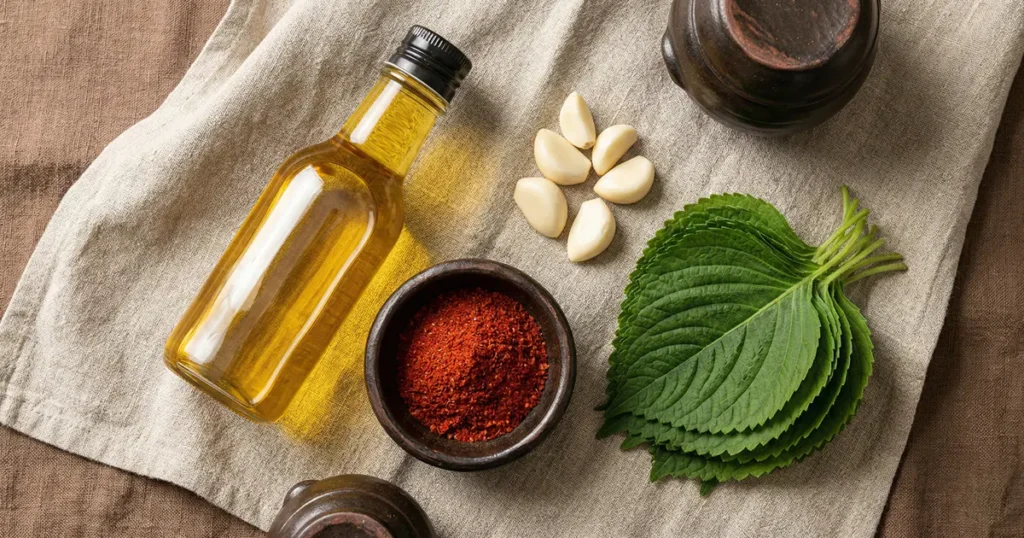
The Perilla Oil Connection: For generations, perilla seeds were pressed for oil in Korean kitchens, making the plant itself a familiar part of everyday life. When a plant is already embedded in the pantry, its leaves are rarely overlooked. What began as a seed-based staple naturally extended to the rest of the plant.
Harmony with Bold Flavors:
Korean cuisine relies heavily on pungent base ingredients such as garlic, green onions, and chili powder. A palate shaped by these bold flavors perceives the distinctive aroma of perilla not as overpowering, but as a balancing element that enhances the overall dish.
The Perfect Ways to Enjoy Perilla Leaves 🍽️
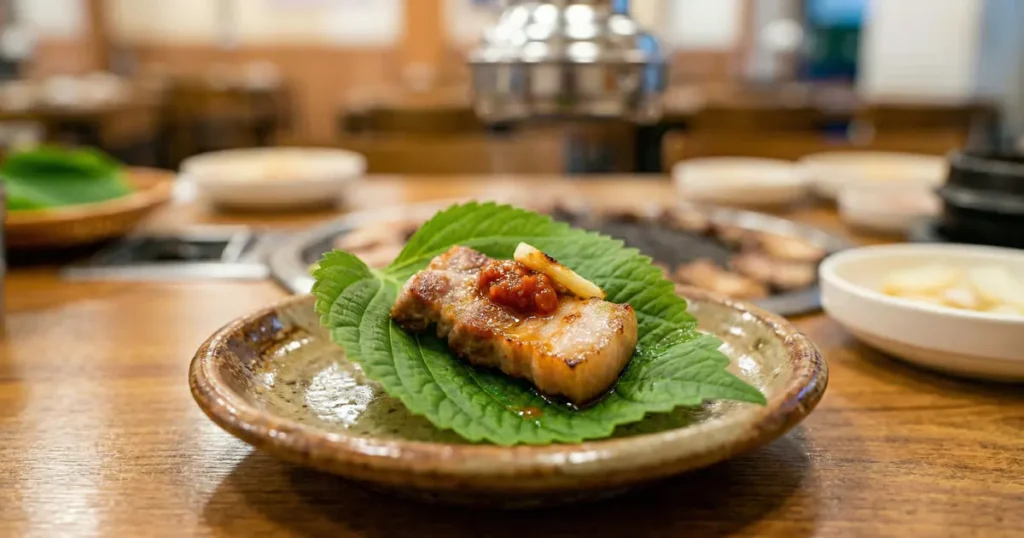
The most popular way to enjoy them is as ssam (wraps). It is practically an unwritten rule of Korean dining to layer a perilla leaf over lettuce when eating grilled pork belly (samgyeopsal). Finely shredded perilla leaves sprinkled over bibimbap or tteokbokki can instantly add aromatic depth.
While they have traditionally been served as side dishes—either pickled in soy sauce (jangajji) or pan-fried in batter (jeon)—modern interpretations include creative dishes like perilla pesto, which brings a distinctly Korean note to pasta and sandwiches.
🏁 Conclusion: A Bite Completed by Aroma
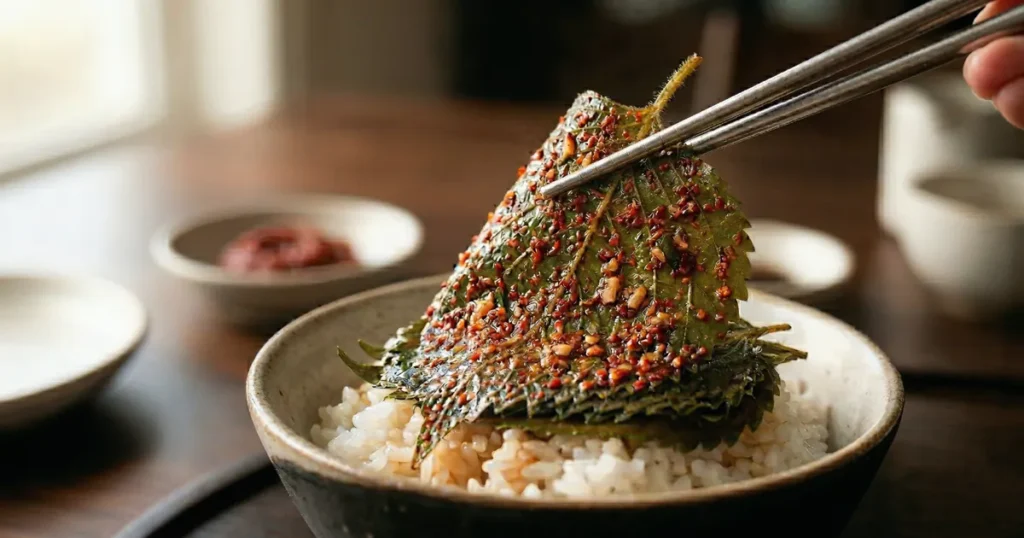
Though perilla leaves are often considered a polarizing herb, in Korea they fulfill a precise role: balancing the richness of meat, amplifying bold seasonings, and sometimes being so flavorful that a single pickled leaf can make an entire bowl of rice disappear.
If you are not averse to strong herbal aromas, try a han-ssam—a generous wrap of grilled pork belly and a dollop of ssamjang inside a fresh perilla leaf. The crisp, refreshing scent cuts cleanly through the fattiness of the meat, while the savory ssamjang binds everything together.
In that single bite—where nuttiness, spice, and herbal brightness unfold in layers—you will understand why this seemingly humble leaf has earned a starring role on the Korean table.