
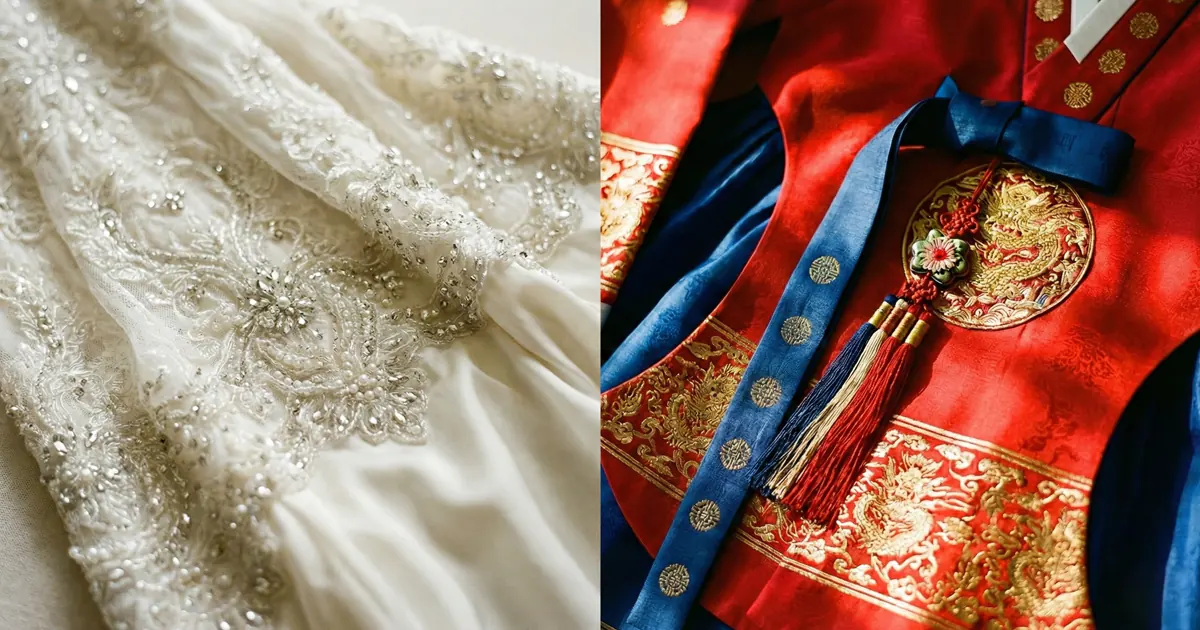
Korean wedding halls are always a whirlwind of activity. As a guest, you witness a bride in a stunning white gown under dazzling lights, offer your congratulations, and then head straight to the banquet hall for a meal. However, while you are enjoying your buffet or galbi-tang, a completely different ceremony is unfolding in a secluded corner of the venue. This dual structure—a flashy Western ceremony followed by an intimate, traditional one—is a unique cultural compromise where Korea’s rapid modernization collides with its deep-rooted heritage.
Part 1: A Modern Declaration of Glamour and Efficiency 👗

The first half of a Korean wedding strictly follows the Western model. This style became the norm during the rapid modernization following the Korean War. Experts analyze this as a combination of a desire for social status and the sheer efficiency required by urban life. In the past, traditional weddings lasted for days in the courtyard of a home, which became a heavy burden for busy modern citizens. This has been compressed into a one-hour event, draped in Western-style splendor. The first part is less about the intimate union and more a social stage for announcing the marriage to the world.
Part 2: The Secret Thirty Minutes of Compressed Tradition 🧧
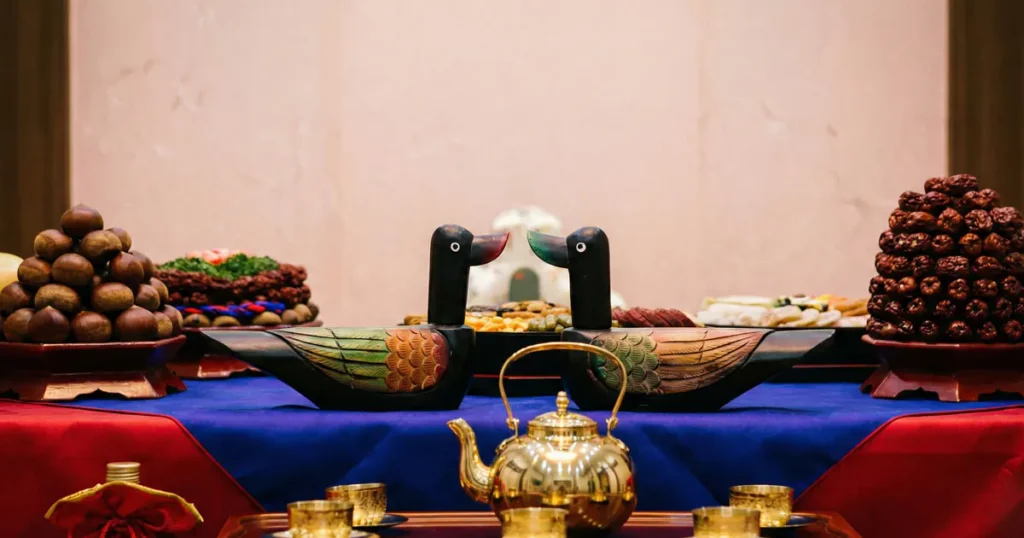
When the guests begin their meal, the couple quietly changes their clothes. From this point on, the real Korean ceremony begins—one that is often only fully understood by those who have gone through it. Traditional Korean weddings were complex affairs involving the groom traveling to the bride’s home and the bride later moving to the groom’s family. Modern Koreans have deliberately compressed this vast tradition into a 30-minute ritual called “Pyebaek”. This hidden time, away from the eyes of most guests, represents a cultural middle ground—preserving ancient customs without sacrificing modern convenience.
The Blessings in Dates and Chestnuts: Bonding Families 🍎
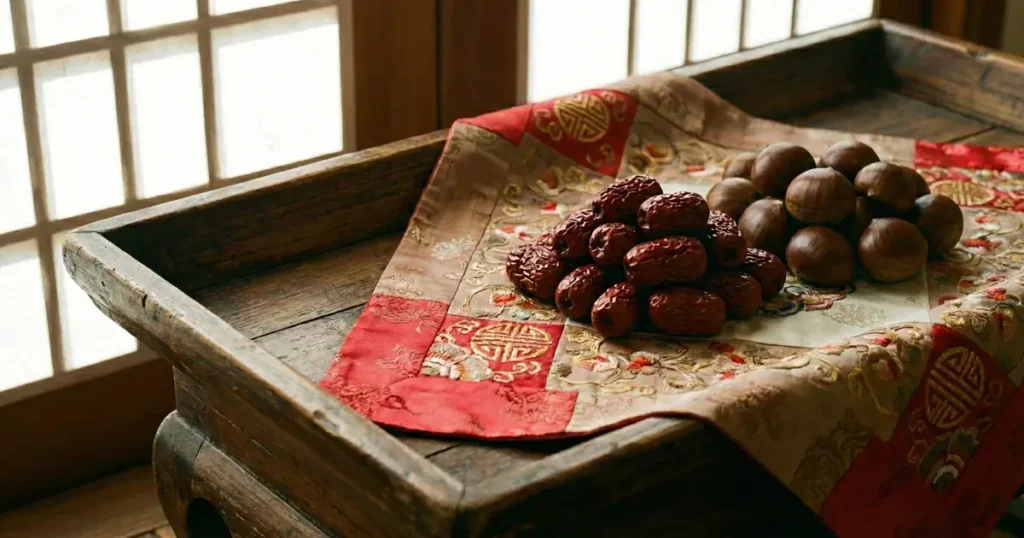
The core of the ceremony held behind the closed doors of the Pyebaek room is the formal greeting to the groom’s family. While Part 1 was a showcase to present the couple to the public, Part 2 is a time of humility, where the couple lowers themselves to vow their commitment as new members of the family. The most famous moment occurs when the parents-in-law throw dates and chestnuts into the bride’s silk skirt (chima, the skirt of a traditional hanbok).
In this ritual, the dates represent sons and the chestnuts represent daughters, symbolizing a wish for prosperity and the continuation of the family line. As the couple spreads the skirt wide to catch as many as possible, the blessings exchanged in that moment solidify the emotional bond of the family.
🏁 Conclusion: Embracing Change for a More Meaningful Start
Recently, Korean wedding culture has been undergoing another major transformation. The COVID-19 pandemic made large gatherings difficult, leading to a significant shift in both the grand Western ceremonies and the secret Pyebaek rituals. Rather than sticking to rigid formalities, more couples are focusing on the essence of the union—opting for intimate family meals or modern expressions of gratitude instead of a formal Pyebaek. While Korean weddings no longer strictly have to happen twice, they are still negotiating a unique balance between the wedding that is “shown” and the wedding where families are truly “bonded.”