
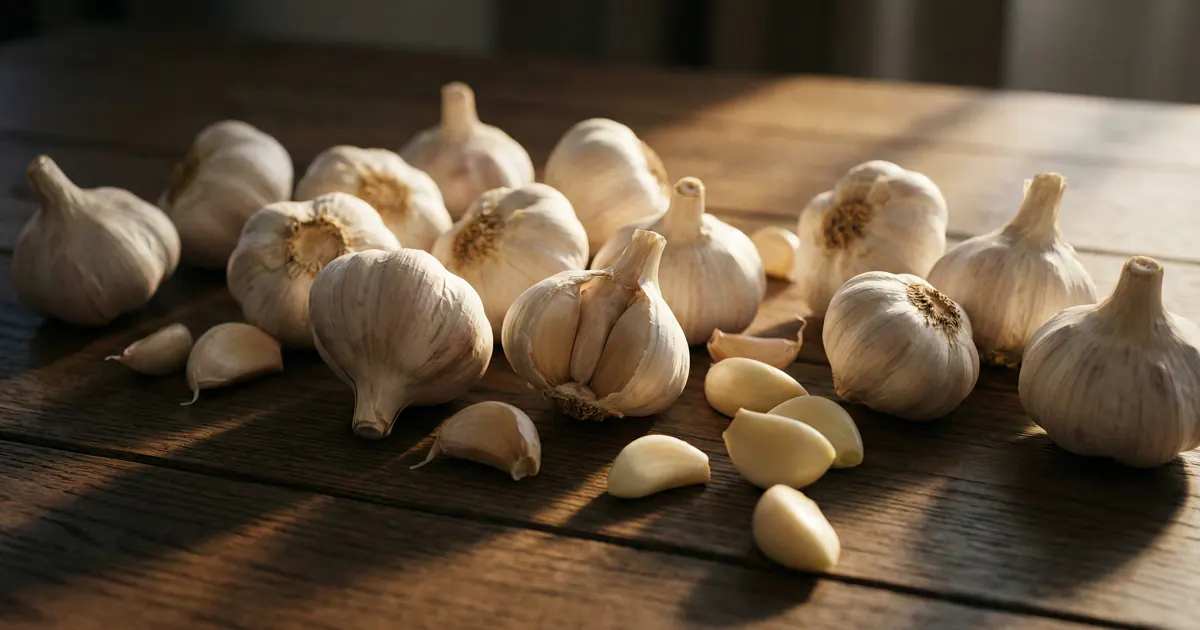
Have you ever been confused by the phrase “add a little garlic” while looking at a Korean recipe? For Koreans, “a little garlic” usually means a generous, heaping tablespoon. On social media, memes of Korean idols or YouTubers are quite popular—they pile up a mountain of minced garlic while casually saying, “I don’t like garlic that much, so I’ll just add a little.” To understand why Koreans are so serious about garlic, we need to look not only at statistics, but at the very myth that shaped the nation.
1. The Birth of a Nation: Garlic History Through Korea’s Foundational Myth 🧄
The Korean love for garlic goes beyond simple eating habits and shares its roots with the very beginning of the nation. In the Dangun Myth, Korea’s foundational origin story, garlic appears as a crucial key to the birth of the nation. This myth shows how deeply garlic is embedded in Korean cultural symbolism.

In ancient times, when Hwanung, the son of the Heavenly Lord, descended to earth to rule the world, a bear and a tiger came to him, pleading to become human. Hwanung gave them a bundle of mugwort and 20 cloves of garlic, telling them that if they stayed in a cave for 100 days without seeing sunlight while eating only these, they would become human. The tiger, unable to endure the pungent taste and the confinement, gave up and fled. However, the bear patiently endured and transformed into a beautiful woman named Ungnyeo in just 21 days. Ungnyeo then married Hwanung and gave birth to Dangun Wanggeom, who founded the first Korean kingdom.
As a playful result of this myth, Koreans often joke about having a sense of pride as descendants of the bear who became human by eating garlic. This myth has laid the foundation for garlic becoming a symbol of patience, purification, and new birth within the Korean identity.
2. Korean Garlic Obsession Proven by Numbers 📊
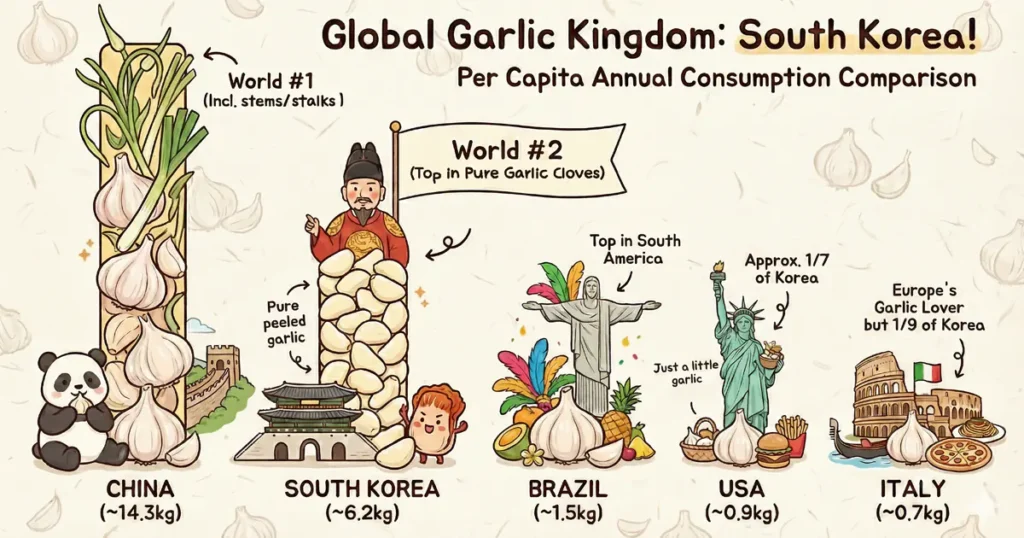
Korean garlic consumption is unrivaled globally. It is not just a perception—the data reveals a stark difference when compared to other countries.
According to agricultural and food consumption statistics, including data from Korea’s Rural Development Administration, Koreans consume several times more garlic than other well-known garlic-using nations like Italy, and in some cases, nearly nine times as much. Recent estimates suggest that annual per capita garlic consumption in Korea remains around the 6kg range. While many cultures view garlic as a seasoning to provide aroma, the secret behind these numbers is that Koreans treat garlic almost as a vegetable rather than merely a seasoning.
3. Beyond a Sub-Ingredient: The Identity of Korean Cooking 🍲
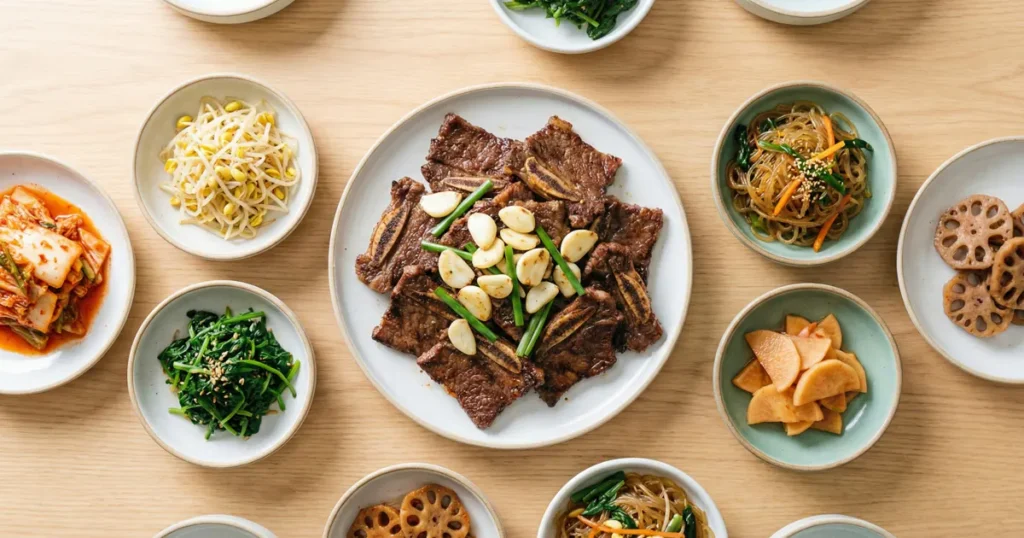
In Korean cuisine, garlic is closer to the category of a vegetable than just a spice. Garlic plays three critical roles in Korean cooking.
Catalyst for Fermentation
The minced garlic added to Kimchi aids the growth of beneficial lactic acid bacteria during the fermentation process and creates a unique savory flavor.
Harmony of Ingredients
It has a powerful deodorizing effect that removes the gamey or fishy smells of meat and seafood, making it essential in protein-centered Korean meat dishes.
Depth of Flavor
Through the transformation of the allicin component when cooked, garlic brings out a deep flavor and sweetness that Koreans particularly enjoy.
A Korean dining table without garlic is like an ocean without salt. It is like a powerful engine that flows beneath the base of every flavor, even if it is not visible on the surface.
🏁 Conclusion: The History Continued by the Descendants of Ungnyeo
On the Korean table, garlic is more than just an ingredient. The history of patience that began in the foundation myth continues today as the rich flavors on the dining table. If a Korean friend adds a handful of garlic and says, “I only added a little,” please understand it as a very Korean expression of affection—the instinct to offer you the best possible flavor.
Have you fallen for the pungent charm of garlic? In the next series, we will return with an interesting story about rice, the source of Korean strength and the nation’s staple food.